Blog
China Best UPS Power Supply Manufacturers for Global Buyers
Choosing China’s best UPS Power Supply manufacturers requires more than comparing prices or reading factory brochures. Global buyers need dependable engineering, transparent testing, stable component sourcing, and responsive after-sales support. A reliable supplier should explain battery chemistry, inverter efficiency, transfer time, overload capacity, and operating temperature in clear terms. It should also provide credible quality records, production evidence, and practical references from similar installations.
Dr. Alexander Kusko, a respected power-quality engineer, once emphasized, “Reliable power begins with understanding the load, not merely buying a larger UPS.” This principle remains valuable when evaluating Chinese manufacturers. A data center, hospital, factory, or telecommunications site may require very different protection strategies. Buyers should review load profiles, backup duration, maintenance access, bypass design, and monitoring compatibility before selecting equipment. International standards, including IEC 62040, can support a more disciplined comparison.
A low price can look convincing.
Yet weak batteries, unclear warranties, or delayed spare parts may create serious ownership costs. Experienced manufacturers usually offer factory acceptance testing, remote monitoring options, installation guidance, and documented service procedures. Still, no supplier is perfect. Some product pages are vague, and technical claims may need independent verification. That is where careful questioning matters. Ask for test reports, efficiency curves, lifecycle estimates, and customer references. The strongest China UPS Power Supply manufacturers combine competitive production capabilities with engineering accountability. They understand that power continuity is not simply a product feature. It is a long-term operating responsibility.
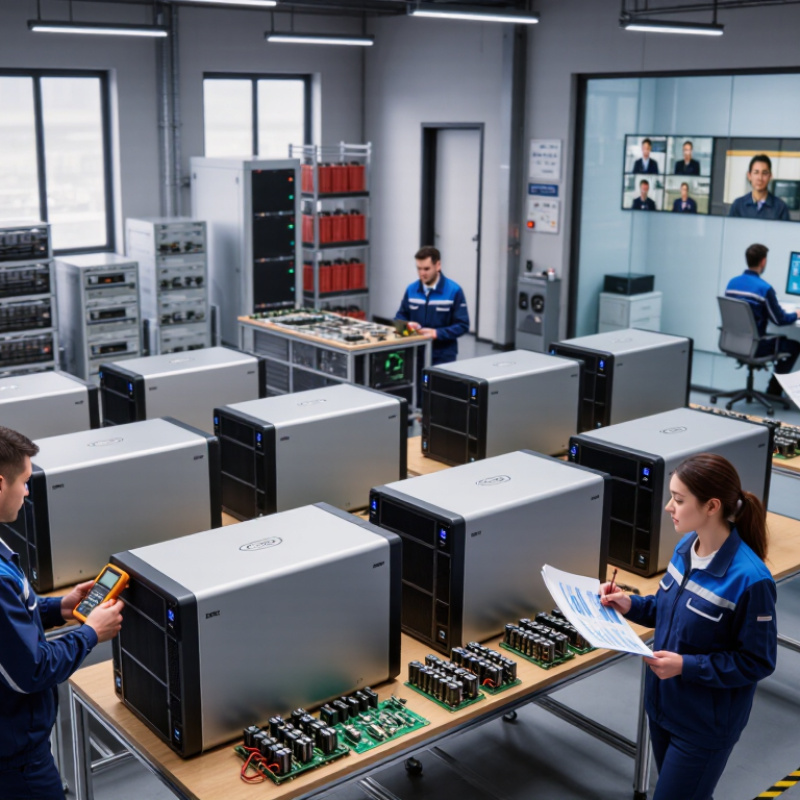
Understanding UPS Power Supply Systems and Their Global Applications
UPS Power Supply Systems for Global Applications
A UPS power supply protects equipment when utility power fails or fluctuates. It provides temporary energy and stabilizes voltage, frequency, and electrical noise. Common systems include standby, line-interactive, and online double-conversion designs. Each type serves different operating conditions. Standby units suit basic office equipment and small network devices. Line-interactive models handle moderate voltage variation in retail, education, and commercial spaces. Online systems offer continuous conditioning for hospitals, data centers, laboratories, and industrial controls. Power quality matters.
Global buyers should match the UPS with load size, runtime, installation space, and local grid behavior. A server room may need a three-phase system, external battery cabinets, and monitored bypass equipment. A remote clinic may prioritize compact design, long autonomy, and easy battery replacement. Input voltage and frequency must suit the destination market. Temperature also matters, especially in poorly ventilated rooms. Dust can shorten fan and battery life. These details are easy to underestimate.
During commissioning, technicians should test transfer time, alarms, overload protection, and battery autonomy. A practical load test reveals weaknesses that specifications may hide. Remote monitoring can record voltage events and predict maintenance needs. Still, no UPS solves every power problem. Poor grounding, incorrect cabling, or neglected batteries can reduce protection. A perfect design is rarely possible. Buyers should request test records, clear warranty terms, spare-parts guidance, and documented safety procedures from qualified manufacturers. Regular inspection remains essential, even when the system appears reliable.
China Best UPS Power Supply Manufacturers for Global Buyers: Typical UPS Efficiency by Topology
UPS efficiency varies according to topology and operating conditions. Standby and line-interactive systems are commonly used for personal computers, small offices, and retail equipment, while online double-conversion systems provide continuous voltage and frequency regulation for data centers, medical equipment, industrial controls, and other critical loads.
Key Criteria for Evaluating Chinese UPS Manufacturers
When evaluating Chinese UPS manufacturers for global procurement, buyers should verify engineering evidence, not rely on catalog claims. The Uptime Institute’s 2024 Global Data Center Survey reported that more than half of operators experienced an outage within three years. This makes response time, redundancy design, and testing discipline practical buying criteria.
Request certificates for IEC 62040 compliance, ISO 9001 quality systems, and documented factory acceptance tests. Check whether the manufacturer measures double-conversion efficiency at different loads, not only at full capacity. Ask for thermal test records, battery autonomy curves, overload performance, and harmonic distortion data. Field experience matters here. A clean cabinet can still hide weak firmware control or poor battery matching.
Inspect production traceability from power modules to final assembly. Require serial-number records, burn-in procedures, calibration reports, and sample-based inspection results. The 2024 Uptime Institute survey also linked many serious outages to human and equipment failures, so remote diagnostics and technician training deserve equal attention. Service coverage should include spare-parts locations, escalation times, and clear warranty exclusions.
Some buyers overvalue a low purchase price. That can be a costly shortcut. I would also visit the factory, though a single visit cannot prove long-term reliability. Independent load-bank testing and reference checks under similar grid conditions provide stronger evidence. Cost, availability, and maintainability must be assessed together.
China Best UPS Power Supply Manufacturers for Global Buyers - Key Criteria for Evaluating Chinese UPS Manufacturers
| Evaluation Dimension | Recommended Buyer Benchmark | Why It Matters | Documents or Tests to Request | Priority |
|---|---|---|---|---|
| Applicable UPS Technology | Online double-conversion UPS for critical loads; line-interactive or standby designs may be suitable for less demanding applications. | Online systems continuously regenerate the output and normally provide zero-transfer-time protection for connected equipment. | Product topology description, single-line diagram, operating-mode specifications, and application references. | High |
| Safety and Product Standards | Conformity with the applicable editions of IEC 62040-1 for safety, IEC 62040-2 for EMC, and IEC 62040-3 for performance and test methods. | Recognized standards help verify electrical safety, electromagnetic compatibility, and declared UPS performance. | Valid test reports, certificates, scope of certification, model numbers, and issuing laboratory details. | Critical |
| Rated Power and Load Capacity | The stated kVA and kW ratings should match the required load, with additional capacity reserved for startup currents and future expansion. | Correct sizing prevents overload, reduces premature battery depletion, and supports reliable operation during demand changes. | Nameplate, continuous-load test results, overload curve, crest-factor rating, and recommended sizing calculations. | Critical |
| Input Power Quality | For three-phase online UPS systems, a buyer target of input power factor around 0.99 or higher and low input current distortion is commonly used. | High input power factor and low distortion reduce upstream losses, generator oversizing, and harmonic interference. | Measured input power factor, total harmonic distortion data, generator compatibility statement, and test conditions. | High |
| Output Voltage Quality | For sensitive electronic loads, evaluate voltage regulation, frequency regulation, phase balance, and output THD under both linear and nonlinear loads. | Stable, low-distortion output protects servers, industrial controls, medical equipment, and communication systems. | IEC 62040-3 performance classification, oscilloscope waveforms, regulation limits, and nonlinear-load test results. | Critical |
| Efficiency and Operating Modes | Compare double-conversion efficiency at 25%, 50%, 75%, and 100% load; verify whether an energy-saving mode is appropriate for the application. | Efficiency affects electricity consumption, heat generation, cooling requirements, and total cost of ownership. | Efficiency curves, heat-loss data, operating-mode descriptions, and independent or witnessed test results. | High |
| Battery Compatibility and Runtime | Runtime should be calculated from the actual load, battery configuration, end-of-discharge voltage, temperature, and aging allowance. | Nominal battery capacity alone does not guarantee the required backup time in real operating conditions. | Battery sizing calculation, runtime curves, recharge time, battery-current limits, temperature compensation, and compatibility list. | Critical |
| Battery and Transport Compliance | For lithium battery systems, verify applicable UN 38.3 test evidence and transport documentation; for lead-acid batteries, verify safety data and shipping classification. | Battery compliance affects import clearance, safe transportation, installation, and legal market access. | UN 38.3 test summary where applicable, Safety Data Sheet, packing instructions, battery certificates, and transport declarations. | Critical |
| Environmental Conditions | Confirm operating temperature, relative humidity, altitude derating, ingress protection, acoustic noise, and required ventilation for the installation site. | Environmental limits directly affect output capacity, battery life, cooling performance, and service reliability. | Installation manual, derating curves, noise measurements, IP rating evidence, and site-condition checklist. | High |
| Modularity and Scalability | For growing facilities, consider hot-swappable power modules, N+1 redundancy, parallel operation, and future capacity expansion. | Modular architecture can improve availability and allow capacity growth without replacing the entire system. | Redundancy diagrams, module replacement procedure, parallel-operation limits, and system availability calculations. | High |
| Quality Management | A documented quality management system certified to ISO 9001 is a useful baseline, subject to certificate-scope verification. | Controlled design, purchasing, production, inspection, and corrective-action processes reduce consistency and traceability risks. | Current ISO 9001 certificate, audit scope, incoming-inspection records, production test plans, and corrective-action procedure. | High |
| Factory Testing and Traceability | Every delivered unit should have a serial number, inspection record, functional test record, and final test results linked to the shipment. | Traceability supports quality investigations, warranty claims, preventive maintenance, and product recalls. | Factory acceptance test procedure, sample reports, serial-number system, calibration records, and inspection checklist. | Critical |
| After-Sales Service | Evaluate local service coverage, spare-parts availability, remote support, response targets, technician training, and preventive-maintenance capability. | Service capability can determine actual uptime after installation, especially for mission-critical sites. | Service-level agreement, escalation process, spare-parts list, training certificates, and support-center coverage. | Critical |
| Warranty Terms | Compare the warranty period, covered components, battery exclusions, response time, replacement policy, labor coverage, and geographical limitations. | A longer warranty is useful only when coverage, exclusions, and claim procedures are clearly defined in writing. | Signed warranty document, component-specific terms, return procedure, service contacts, and sample claim workflow. | High |
| Remote Monitoring and Integration | Support should be assessed for SNMP, Modbus, dry contacts, alarm notifications, event logs, and integration with the buyer’s monitoring platform. | Monitoring enables earlier fault detection, maintenance planning, and centralized management of distributed UPS systems. | Communication protocol list, register map, cybersecurity information, software manuals, and integration test results. | High |
| Total Cost of Ownership | Compare purchase price together with energy losses, batteries, preventive maintenance, replacement parts, freight, duties, installation, and disposal costs. | The lowest purchase price may not provide the lowest lifecycle cost or the best availability. | Five- to ten-year cost model, efficiency data, battery-replacement assumptions, maintenance schedule, and logistics quotation. | High |
Note: The benchmarks above are procurement guidelines rather than claims about any specific manufacturer. Requirements should be matched to the destination market, installation environment, load profile, applicable regulations, and project availability target.
Major Types of UPS Products Offered by Chinese Suppliers
China Best UPS Power Supply Manufacturers for Global Buyers
Chinese suppliers commonly offer three core UPS types: standby, line-interactive, and online double-conversion systems. Standby UPS units suit desktop computers, network routers, and small retail equipment. They switch to battery power during an outage, usually within several milliseconds. Line-interactive models add automatic voltage regulation. This helps protect equipment in areas with frequent voltage dips. Online UPS systems continuously convert incoming power. They provide stable output for servers, medical equipment, and industrial controls.
Modular online UPS products are also widely available. Their rack-mounted modules allow capacity expansion without replacing the entire cabinet. Three-phase models support factories, data rooms, and large building systems. Buyers should compare rated power, overload capacity, transfer time, battery autonomy, and output waveform. Battery choices often include valve-regulated lead-acid and lithium-ion systems. Lithium batteries save space, but their protection system needs careful review. Datasheets can look impressive. Installation details still matter more.
In supplier evaluations, request factory test records, efficiency curves, thermal test results, and reports aligned with IEC 62040 requirements. Check whether the quoted capacity is real power or only apparent power. That difference can affect operating costs. Ask about burn-in testing and spare-part availability. A low price may hide weak fans, limited monitoring, or poor documentation. This is easy to miss. My practical view is cautious: the best UPS type depends on load behavior, local grid quality, maintenance skills, and room conditions. A supplier should explain these trade-offs clearly, even when the answer reduces the order value.
Manufacturing Standards, Certifications, and Quality Control
China Best UPS Power Supply Manufacturers for Global Buyers
Manufacturing Standards, Certifications, and Quality Control
Reliable UPS manufacturing begins with standards that match the buyer’s destination market. Manufacturers should design products against applicable IEC 62040 requirements for safety, performance, and electromagnetic compatibility. Some markets may also require UL, CE, RoHS, or local certifications. Buyers should request current certificates, test reports, and certification scopes. A certificate alone proves little if it covers a different model.
Quality control should cover every production stage. Incoming inspectors verify batteries, capacitors, circuit boards, and cooling fans against approved specifications. Assembly teams record torque values, wiring checks, and firmware versions. Each finished UPS needs controlled testing for output voltage, transfer time, overload response, battery charging, alarms, and thermal performance. Longer tests matter. Burn-in testing can reveal unstable fans, weak solder joints, or unexpected temperature increases.
Experienced factories also maintain serial-number traceability from components to shipment. This supports faster investigation when field issues appear. Environmental testing should reflect real use, including voltage fluctuation, humidity, dust, and repeated power transfers. However, no test plan is perfect. Some suppliers may overuse factory simulations and underrepresent harsh installation conditions. Buyers should compare sample results, inspection records, calibration dates, and corrective-action reports. Clear documentation builds trust, but honest disclosure of limitations builds more.
How Global Buyers Can Select and Work With the Right Manufacturer
Global buyers need more than a competitive quotation when selecting a UPS power supply manufacturer. The IEA’s Energy and AI report estimates that data centers consumed about 415 TWh of electricity in 2024. Demand may reach 945 TWh by 2030. This pressure makes efficiency, serviceability, and verified performance essential. Ask manufacturers for audited efficiency curves, battery test records, thermal data, and failure-response procedures. A polished brochure is not evidence.
Tips: Compare suppliers using the same load profile. Check performance at 25%, 50%, and 75% load. Request references from facilities with similar voltage standards and operating temperatures. Confirm spare-parts availability near your market. Clarify commissioning, remote monitoring, technician training, and warranty exclusions before signing. Small omissions become expensive later.
Uptime Institute’s Global Data Center Survey 2024 continues to identify power-related problems as a major source of operational risk. Buyers should therefore inspect factory quality controls, not only product specifications. Review production traceability, burn-in testing, firmware governance, and corrective-action records. A factory visit can reveal cable labeling, battery storage conditions, and testing discipline in minutes. However, one visit cannot prove long-term reliability. Independent testing and site acceptance trials still matter. Price remains important, but the cheapest offer may create higher lifecycle costs. That lesson is easy to ignore.
Related Posts
-
Exploring Innovative Alternatives to Traditional UPS Systems for Global Buyers
-

Top 10 UPS Systems for Global Buyers in 2026 Questions?
-
Exploring the Unique Features of Ups Power Solutions and How to Choose the Right One for Your Needs
-

What is an Uninterruptible Power Supply and How Does It Work?
-

2025 Trends in Power Backup Technology and How to Maximize Your Investment
-
Evolving Trends in Back Up Power Supply Solutions for Global Markets