Blog

Top 10 Car Elevator Platforms for Global Buyers

Choosing a Car Elevator Platform is not simply a matter of comparing lifting height, speed, or price. Global buyers face different building codes, climate conditions, site limitations, and service expectations. A platform installed in a narrow European garage may require different protection from one used in a humid coastal warehouse.

Klaus Wöhr, a recognized specialist in automated parking systems, has emphasized a practical principle: “The best parking solution is the one that fits the building, the user, and the local conditions.” That perspective matters when evaluating suppliers across international markets. A technically impressive platform can still perform poorly if its pit depth, door clearance, control system, or maintenance plan is unsuitable.

This guide reviews ten Car Elevator Platform options for global buyers. It considers rated load, platform dimensions, lifting range, safety features, installation requirements, energy use, and after-sales support. It also looks beyond polished brochures. Real projects may involve delayed components, difficult foundations, language barriers, or unclear warranty terms. These issues are easy to overlook.

Not every ranking will fit every buyer.

A compact platform may serve a private garage well, but fail in a busy commercial facility. A low-cost model may appear attractive, yet replacement parts can become expensive later. Buyers should request drawings, test records, maintenance schedules, and verified project references before making a decision. The final choice should balance performance, risk, and long-term serviceability—not marketing claims alone.
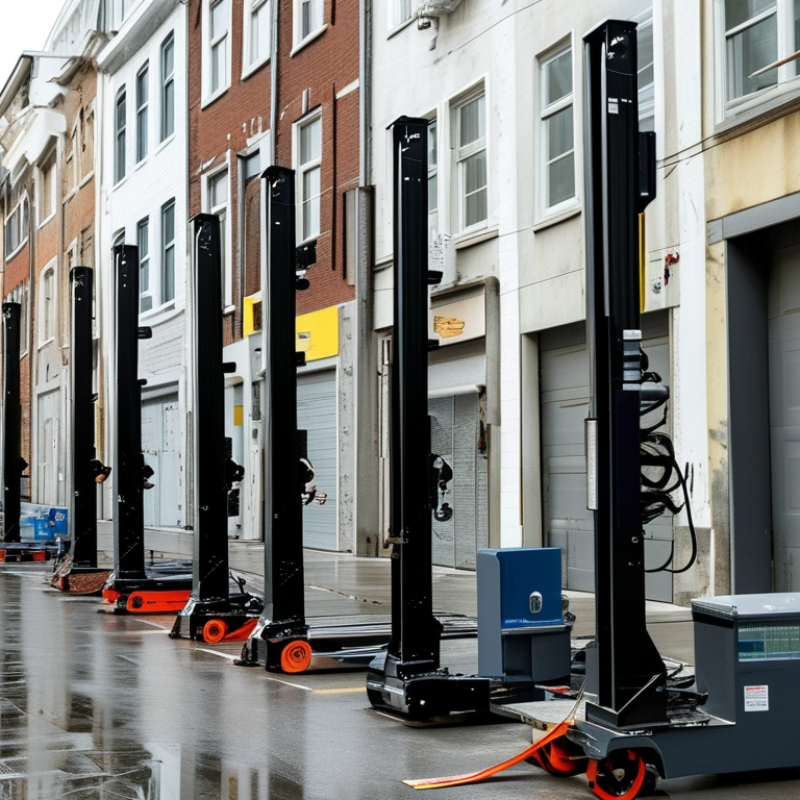
Top 10 Car Elevator Platforms for Global Buyers

Car Elevator Platforms: Definition, Purpose, and Main Applications

Car elevator platforms are vertical lifting systems designed to move vehicles between parking levels. Unlike passenger elevators, they use reinforced platforms, guide rails, doors, and vehicle-rated controls. Their purpose is practical: they reduce ramp space, improve land use, and connect compact parking floors safely.

The need is growing in dense cities. The World Bank reports that about 56% of the global population lived in urban areas in 2023. The International Energy Agency recorded nearly 14 million electric car sales in 2023. These vehicles still require secure parking and charging access. Car elevator platforms serve residential towers, hotels, automated garages, dealerships, vehicle storage facilities, and service centers. Hydraulic and traction systems are common, but platform size, load capacity, travel height, and operating speed vary widely. The category is not perfectly standardized. A visually impressive platform may still create delays during peak hours.

Tips: Global buyers should verify local safety certification, emergency lowering, door interlocks, drainage, and maintenance access. Check the actual axle load, not only the advertised maximum weight. Measure vehicle height with roof boxes, charging equipment, or open doors. The International Organization for Standardization and local building authorities may apply different requirements. Ask for test records, installation references, and a clear service schedule. Energy use also deserves attention, especially for frequent daily operation. A cheaper lift can become expensive when inspections, downtime, and spare parts are overlooked.

Key Types of Car Elevator Platforms for Different Building Needs

Choosing among the top car elevator platforms starts with the building, not the equipment catalogue. Each site has different traffic, floor heights, soil conditions, and fire safety requirements. A platform that works well in a private garage may fail under continuous commercial use.

Hydraulic car elevators suit low-rise buildings with moderate travel distances. They offer strong lifting force and relatively simple installation. However, they need adequate pit space, oil management, and regular seal inspections. Traction platforms fit taller buildings and frequent movement. They provide efficient vertical travel, but require more headroom, careful counterweight design, and dependable control systems. Scissor platforms can serve compact garages where side clearance matters. Their lifting pattern is practical, yet uneven loading can affect stability if operators ignore the marked driving position.

Limited-space projects may consider screw-driven platforms. They move more slowly, but their structure can reduce overhead demands. Two-post or four-post platforms often support private parking and light commercial storage. Four-post designs usually distribute vehicle weight well. Inclined platforms may connect split-level floors when a vertical shaft is impractical. They need accurate alignment and strong edge protection.

A reliable selection process checks rated load, vehicle dimensions, pit depth, drainage, door interlocks, emergency lowering, and backup power. Regulations differ by region, so local engineering approval remains essential. A polished specification can still hide poor access for maintenance. That mistake is easy to overlook. Clear operator training, inspection records, and realistic traffic testing often matter as much as lifting speed.

Safety Standards and Essential Features for Global Buyers

Top 10 Car Elevator Platforms for Global Buyers

Safety Standards and Essential Features for Global Buyers

Global demand for compact parking is rising with urban density. The United Nations projects that 68% of people will live in cities by 2050. The International Energy Agency also reported over 17 million electric cars sold worldwide in 2024. Heavier vehicles make accurate platform ratings increasingly important.

For global buyers, safety begins with verified load testing, not attractive specifications. EN 1493 addresses vehicle lifts, while ASME A17.1/CSA B44 may apply to certain elevating devices. Passenger-lift requirements under EN 81-20 and EN 81-50 should not be assumed automatically. Ask suppliers to identify the exact standard and certification scope.

Essential features include mechanical anti-fall locks, slack-chain or cable detection, overload protection, emergency-stop controls, and guarded moving areas. Every landing gate should have an interlock that prevents movement when open. A battery-backed emergency lowering system can help during power failures. It needs regular testing.

ISO 13849-1 provides a framework for safety-related control systems and performance levels. Buyers should request risk assessments, wiring diagrams, factory test records, and maintenance intervals. The International Organization for Standardization stresses documented risk reduction throughout machinery lifecycles. Yet paperwork alone cannot prove safe operation. A platform may meet its stated rating but perform poorly after uneven loading, corrosion, or neglected inspections. That possibility deserves practical review.

How to Compare Capacity, Dimensions, Technology, and Installation

Top 10 Car Elevator Platforms for Global Buyers

Comparing car elevator platforms requires more than reading rated capacity. The IEA’s Global EV Outlook 2025 reports over 17 million electric car sales in 2024. Many electric SUVs now weigh close to, or above, 2.5 tonnes. A 3-tonne platform may therefore offer limited practical reserve. I recommend checking the heaviest vehicle, passengers, accessories, and loading impact before selecting capacity. A useful working margin is 15% to 20%, subject to local engineering approval.

Dimensions can create expensive surprises. Measure the vehicle’s mirrors, roof height, wheelbase, and turning path, not only its body length. For many large SUVs, a platform around 5.5 metres long and 2.4 metres wide may still feel tight.

Door clearance matters. So does drainage space. Grand View Research’s parking systems analysis identifies automation and space optimization as major market drivers, but compact design should not reduce safe access or maintenance room.

Technology comparisons should include hydraulic or traction drive, emergency lowering, overload sensing, anti-drop protection, and manual recovery procedures. EN 1493 and ASME A17.1 provide useful reference points, although the final requirement depends on jurisdiction.

Installation also needs structural surveys, power quality checks, pit accuracy, ventilation, and fire-safety coordination. My own early mistake was comparing equipment prices before measuring the site. The cheapest platform became costly after civil modifications.

Installation records, inspection certificates, spare-part availability, and technician response times deserve equal weight. Look beyond the brochure.

Top 10 Car Elevator Platforms and Their Distinctive Advantages

Top 10 Car Elevator Platforms and Their Distinctive Advantages

Global buyers need more than lifting capacity. They need safe movement, clear documentation, and practical installation support. From field experience, ten platform types deserve close attention.

Hydraulic platform offers smooth lifting and simple maintenance.
Scissor platform saves space in compact garages.
Four-post platform provides strong stability for heavier vehicles.
Two-post design uses less floor area.
Pitless platform reduces civil construction work.
Turntable platform improves vehicle alignment in narrow entrances.
Telescopic platform supports limited-height buildings.
Folding platform suits small residential sites.
Outdoor-rated platform handles rain, dust, and temperature changes.
Smart platform adds sensors, access control, and operating records.

Each option has a different advantage. Hydraulic systems often feel steady during daily use. Scissor systems can create a cleaner garage layout. Four-post structures may simplify vehicle positioning. Two-post systems need careful balance and anchoring. Pitless models may reduce project disruption, but they can raise vehicle height. Turntables improve circulation, though they require accurate space planning. Smart controls increase visibility, yet they also need reliable training and maintenance.

I have seen projects fail because the entrance width was measured incorrectly. That mistake is avoidable, but it still happens.

Tips:

Check rated load, platform size, lifting height, safety locks, drainage, noise levels, and emergency lowering.

Request installation drawings and inspection records before ordering.

Confirm local electrical requirements and service availability.

No platform is perfect. The best choice matches the building, vehicle mix, budget, and maintenance ability.