Blog

What Is a Socks Printer and How Does It Work?

A Socks Printer is a specialized digital machine designed to place detailed images, patterns, and colors directly onto socks. Unlike traditional methods, it can produce small batches without creating separate screens for every design. This makes it useful for custom brands, sports teams, promotional products, and personalized gifts.

The process begins with a digital artwork file. The operator checks its size, color balance, and placement before production. Each sock is fitted over a shaped holder, which keeps the fabric smooth and stable. The printer then moves the sock beneath its printhead. Tiny droplets of ink build the image layer by layer. After printing, heat or another approved curing method helps the ink bond with the fibers. The result should feel flexible, although softness can vary by fabric, ink, and curing conditions.

In practical use, preparation matters more than many beginners expect. Cotton, polyester, and blended socks may require different inks or settings. A clean holder, consistent tension, and accurate drying time can prevent blurred edges and uneven color. Even experienced operators inspect test samples before approving a larger run. It is not a perfect process. Dark fabrics may need pretreatment or white ink, while complex artwork can expose small registration errors. Understanding these limits helps buyers compare equipment honestly and choose realistic production goals. This guide explains the machine, its workflow, key materials, and the quality checks that support dependable results.
What Is a Socks Printer and How Does It Work?

What a Socks Printer Is and What It Produces

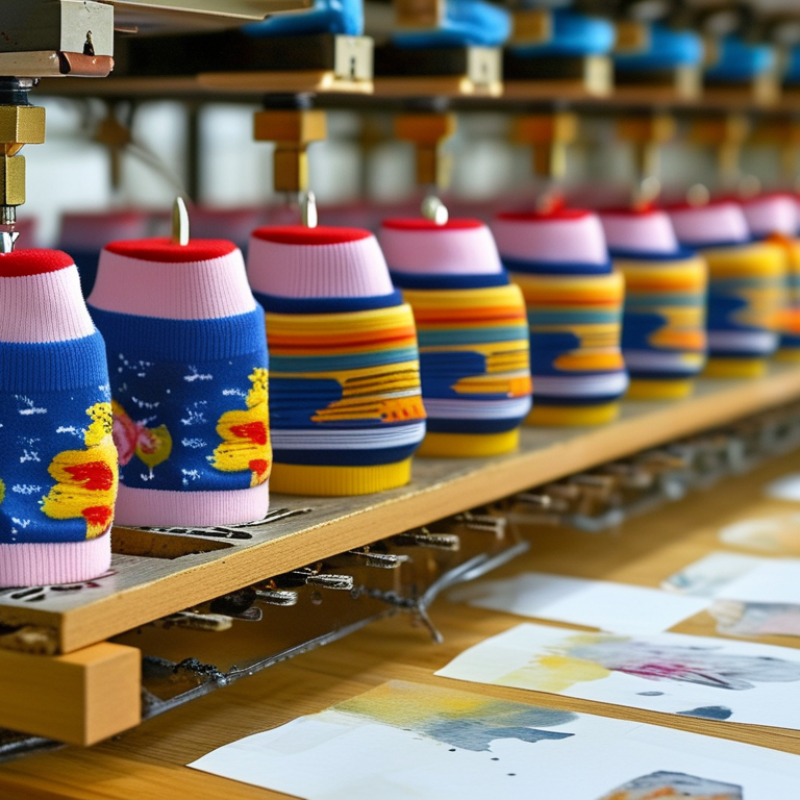
A socks printer is a specialized digital printing machine designed for knitted socks. It places colored ink onto a stretched sock surface instead of printing on a flat sheet. The sock usually sits on a rotating cylinder or flexible printing fixture. This movement helps the printhead cover the heel, ankle, and toe areas with better alignment.

The machine can produce custom patterns, small illustrations, text, gradients, and detailed images. Polyester and polyamide socks generally accept digital textile inks well, especially when the fabric has a light base color. Dark socks may require a different process because ordinary inks cannot create a bright white underlayer. A printed pair can show a blue wave around the ankle, tiny stars near the toe, or a repeated geometric pattern across the leg.

The workflow needs careful preparation. Operators adjust artwork size, fabric tension, ink volume, and drying temperature before production. If the sock stretches unevenly, a straight line may look slightly curved. It happens. Color can also change after washing, depending on fiber content and ink curing. Quality checks should include print sharpness, stretch recovery, color consistency, and wash resistance. A socks printer does not create the sock itself; it decorates a knitted product that has already been made. This distinction matters when estimating production time, material waste, and final quality.

The Main Printing Technologies Used for Custom Socks

A socks printer is a machine that applies images, colors, or patterns to knitted sock tubes. It controls ink placement while the fabric stretches around a cylindrical holder. Unlike flat garments, socks can twist during printing. Small alignment errors may appear near the heel or toe.

The main technology is dye sublimation. Heat turns the ink into gas, allowing it to bond with polyester fibers. It produces bright, durable designs, especially for sports socks. Reactive digital printing suits cotton and other cellulose fibers, but it needs pretreatment, steaming, and washing. Screen printing remains useful for simple, high-volume graphics. However, it uses more setup time and handles fine gradients less effectively. Smithers’ report, The Future of Digital Textile Printing to 2028, forecasts continued growth in digital textile printing as short runs and customized products expand. This supports demand for flexible sock production, although market forecasts are not guarantees.

Tips: Match the ink to the fiber first. Test a stretched sample, not a flat one. Check color after curing. Keep important details away from the heel and toe. A 1–2 mm shift can change the appearance. No method is perfect. Even experienced operators may need another test when fabric tension changes. According to textile quality-control practice, wash testing should examine colorfastness, shrinkage, and print cracking before delivery. Attention here prevents attractive designs from becoming uncomfortable socks.

What Is a Socks Printer and How Does It Work? - The Main Printing Technologies Used for Custom Socks

Printing Technology How It Works Best-Suited Sock Materials Main Advantages Common Limitations Typical Uses
Direct-to-Garment Textile Inkjet Print heads spray liquid textile ink directly onto the sock surface. The sock is usually mounted over a cylindrical fixture to keep the fabric positioned during printing. Cotton, polyester, nylon, and blended knitted fabrics, depending on the ink formulation and pretreatment. Supports detailed artwork, gradients, photographs, and short production runs with relatively little setup. Ink adhesion, color depth, and wash durability depend strongly on fabric preparation, curing, and ink compatibility. Personalized socks, promotional products, small-batch collections, and photo-based designs.
Dye-Sublimation Transfer A design is printed with sublimation dye onto transfer paper and then heated. The dye changes into a gas and bonds with compatible polyester fibers. Primarily white or light-colored polyester and polyester-rich blends. Produces vivid, lightweight prints that become part of the fiber surface and do not create a thick raised layer. Generally unsuitable for cotton and dark fabrics without additional processes; heat can affect elastic components if poorly controlled. Sports socks, full-color polyester designs, all-over patterns, and customized athletic apparel.
Screen Printing Ink is pushed through a stencil-covered mesh screen onto the sock. Each color normally requires a separate screen and controlled registration. Cotton, polyester, nylon, and blends when the ink and curing method are properly selected. Provides strong opacity, durable solid colors, and efficient production for repeated designs and larger quantities. Requires screen preparation, color separation, and accurate alignment; fine gradients and highly detailed images are more difficult. Team socks, uniform designs, logos, lettering, and high-volume orders with limited colors.
Rotary Screen Printing Cylindrical screens rotate while applying ink to a continuously positioned sock or tubular textile, allowing repeating patterns around the circumference. Knitted cotton, polyester, nylon, and blended tubular fabrics compatible with textile inks. Efficient for consistent repeating patterns and larger production volumes; suitable for continuous textile workflows. Higher preparation costs and less flexibility for one-off designs; registration and fabric stretch must be carefully controlled. Repeated stripes, patterned socks, and large-scale production of standardized designs.
Digital Knitting A computerized knitting machine selects and interloops different colored yarns while constructing the sock, so the design becomes part of the knitted structure. Cotton, polyester, nylon, wool, elastane-containing yarn systems, and other knitting-compatible fibers. Excellent durability, no surface ink layer, integrated patterns, and good suitability for designs that follow the sock shape. Color and image detail are limited by yarn selection, stitch structure, gauge, and the physical resolution of the knitting machine. Jacquard patterns, text, stripes, athletic socks, and premium knitted designs.
Heat-Transfer Vinyl or Film A design is cut or printed onto a heat-transfer film, weeded when necessary, and bonded to the sock using pressure and heat. Smooth polyester, cotton, and selected blends with a stable surface and suitable heat resistance. Useful for names, numbers, simple graphics, and small quantities; can provide strong color coverage. The film may feel raised, reduce stretch, crack if poorly applied, or peel when fabric preparation and curing are inadequate. Names, numbers, simple symbols, limited-edition products, and quick customization.
Embroidery A programmable needle machine stitches thread directly into the sock or into a separately prepared patch that is attached afterward. Structured or reinforced areas of cotton, polyester, nylon, and blended socks; very thin knits may require stabilizing support. Creates a textured, premium appearance with strong resistance to surface fading and abrasion. Not ideal for photographic detail, large filled areas, or highly elastic zones; stitching can add weight and reduce stretch. Monograms, small emblems, premium casualwear, workwear, and decorative sock patches.

Note: Print quality and durability depend on fiber composition, sock construction, pretreatment, ink or yarn selection, curing conditions, stretch, and washing practices.

How a Socks Printer Creates Designs Step by Step

What Is a Socks Printer and How Does It Work?

How a Socks Printer Creates Designs Step by Step

A socks printer applies digital artwork directly onto prepared socks. I have seen the process begin with careful fabric inspection. Operators check the sock size, stretch, fiber blend, and surface tension. These details affect how sharply the ink appears.

The design is adjusted to match the sock’s curved shape. Special software unwraps the artwork into a printable layout. The sock then slides over a cylindrical holder. This holder keeps the fabric steady while it rotates under the print head. Tiny ink droplets build colors line by line. The machine may print the heel, toe, and ankle with different settings. Alignment matters here. A small shift can distort a logo or pattern.

After printing, the ink needs heat or another approved curing method. This step helps it bond with the fibers and resist normal washing. The exact temperature depends on the material and ink type. Technicians usually test one sock before starting a larger batch. They inspect color, stretch, edges, and coverage under bright light. The result is not always perfect. Dark fabric can reduce brightness, while heavy stretching may soften fine details. I would not trust the first sample without washing it. A practical test often reveals problems that a fresh print hides.

Materials, Ink Types, and Sock Compatibility

What Is a Socks Printer and How Does It Work?

A socks printer places a sock over a rotating cylindrical fixture. The printhead then applies tiny ink droplets while the fabric turns. This process supports detailed artwork without cutting separate panels.

According to Grand View Research, the global digital textile printing market was valued at about USD 2.3 billion in 2023. Its projected growth reflects rising demand for shorter, customized production runs.

Material Selection and Ink Compatibility

Material selection controls the result. Polyester usually works well with disperse or sublimation inks because heat bonds the color to the fibers. Cotton needs reactive or pigment ink, depending on softness and washing requirements. Nylon often performs better with acid ink.

Blended socks can be troublesome. The color may look uneven across the cotton and synthetic fibers.

Fit, Durability, and Production Testing

The sock must also fit the machine’s diameter and length limits. Elastane adds stretch, but excessive tension can distort small lettering. Pretreatment, drying, and heat curing affect durability.

Smithers’ digital textile printing research identifies automation and improved ink performance as important market drivers. However, laboratory tests cannot replace washing trials.

I have seen samples look sharp before washing, then lose edge clarity afterward. That detail is easy to overlook. A reliable workflow tests the exact yarn blend, ink, stretch, and curing temperature before production.

Key Uses and Benefits of Digital Sock Printing

A socks printer is a digital textile machine that places custom artwork directly onto sock fabric. It uses software to prepare the design and controlled ink systems to print across the knitted surface. Unlike traditional methods, digital printing does not require separate screens for every color. This makes short production runs more practical and reduces setup time. A typical workflow includes artwork preparation, sock positioning, color calibration, printing, drying, and quality inspection. The fabric must remain stable during printing. Otherwise, lines may shift or images can look stretched.

Digital sock printing supports sports teams, promotional campaigns, schools, small fashion collections, and personalized gifts. It can reproduce names, numbers, patterns, illustrations, and detailed gradients with useful accuracy. The main benefits are design flexibility, lower sampling costs, and faster changes between orders. Businesses can test several ideas without storing large quantities of printed inventory. Customers also receive more personal products, such as socks with a local symbol or a carefully chosen color palette. Still, the process is not perfect. Dark fabrics may need special treatment, and heavy ink coverage can affect softness or drying time. Color on a screen may also differ slightly from the finished sock. Experienced operators check fabric stretch, print alignment, wash resistance, and skin comfort before approving production. Small errors remain possible, especially around the heel and toe. That deserves honest review, not optimistic advertising.