How to Choose the Best Wifi Doorbell for Your Home?
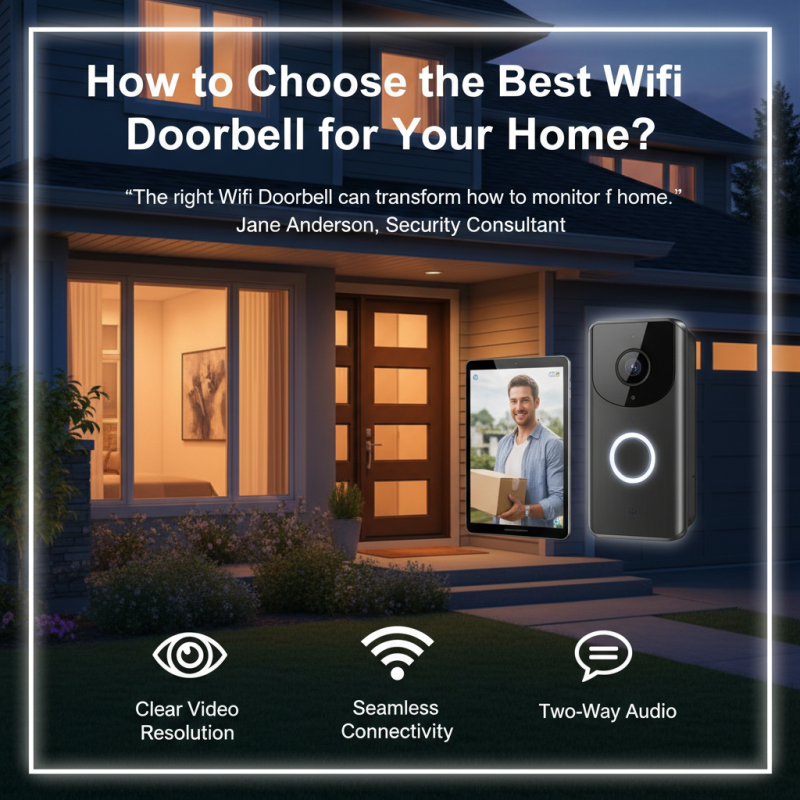
When it comes to enhancing home security, a Wifi Doorbell is a modern necessity. Industry expert Jane Anderson, a seasoned security consultant, states, "The right Wifi Doorbell can transform how you monitor your home." With the rise of smart home devices, selecting the best Wifi Doorbell becomes crucial.
Numerous options flood the market, each with unique features. A good Wifi Doorbell should not only have a clear video resolution but also seamless connectivity. Many people overlook how sound quality impacts alert systems. A doorbell that doesn't communicate well can lead to missed notifications. Thus, it’s essential to consider all aspects.
Many buyers rush through their choices, often regretting their decisions later. Take time to assess features that truly matter to you. Whether you're looking for motion detection or two-way audio, reflective consideration will lead to a better fit for your home. A dependable Wifi Doorbell can provide peace of mind and enhance your home’s security.
Factors to Consider When Selecting a Wifi Doorbell for Home Security
Choosing the right Wi-Fi doorbell can significantly enhance your home security. Look for high-resolution video quality. Clear images help identify visitors, even in low light. Consider models with night vision. This feature is crucial for monitoring your home after dark.
Battery life is another important factor. A doorbell that frequently needs charging can be a hassle. Choose one with long-lasting batteries or a wired option for consistent power. Think about installation as well. Some doorbells might require professional help, increasing costs.
Don't overlook the app compatibility. A user-friendly app can make monitoring easier. Features like two-way audio and instant notifications add convenience. Evaluate the field of view too. A wider angle gives better coverage of your entrance. Finally, think about privacy concerns. Ensure the doorbell's data is encrypted and that it complies with security regulations.
Comparison of Popular Wifi Doorbell Features and Specifications
When choosing a WiFi doorbell, several key features can make a big difference. Video quality is crucial. Look for at least 1080p resolution for clear images. A wider field of view can help you see more of your entrance. Night vision capability is also essential for nighttime visibility. Many doorbells offer infrared night vision, but the effectiveness can vary.
Audio features matter too. Good two-way audio helps you communicate with visitors. Look for models with noise cancellation for better clarity. Some doorbells include motion detection and customizable alerts. This can help you know when someone is at the door, even when you're busy.
Tips: Consider power options when selecting a WiFi doorbell. Some connect to existing wiring, while others run on batteries. Battery life can be a concern and may require frequent changes. Check reviews to understand real-life performance. Reviews can highlight issues that specifications may miss. Also, think about the installation process. Some models can be tricky to mount. Ensure you’re comfortable with DIY or choose an option that offers professional installation services.
Understanding Resolution and Image Quality in Wifi Doorbells
When choosing a WiFi doorbell, image quality is paramount. A clear and detailed picture can enhance your security. Various industry reports indicate that 1080p resolution is the most common standard for video doorbells today. This resolution typically offers a good balance of clarity and bandwidth usage. However, users often overlook that even with high resolution, poor lighting can result in grainy images, especially at night.
Field of view is another critical aspect affecting image quality. Wider angles, around 160 degrees, allow for better coverage of your entrance. Yet, some users may find that wide-angle cameras can distort images, making faces less recognizable. Additionally, HDR (High Dynamic Range) capabilities can significantly improve performance in varying light conditions. A recent study showed that devices with HDR technology resulted in a 30% increase in image clarity during twilight hours.
Compression techniques also play a role in video quality. Many devices use H.264 or H.265 encoding to reduce file size while maintaining quality. However, excessive compression can lead to loss of detail. Some users notice a drop in clarity when zooming into images. It's important to balance compression and quality for optimal results. Make sure to evaluate how various features impact your daily use and security needs.
Evaluating Connectivity and Range for Optimal Wifi Doorbell Performance
When selecting a Wi-Fi doorbell, connectivity and range are critical factors. A strong, stable connection ensures that your doorbell functions reliably. Check your home’s Wi-Fi coverage. Dead spots can hinder the performance. Consider the distance from your router to the doorbell installation point.
Tips: Use a Wi-Fi extender if your signal is weak. This device can boost coverage and improve connectivity. Additionally, choose a doorbell that supports the latest Wi-Fi standards for better performance.
Test the signal strength where the doorbell will be installed. You may find that some areas have poor reception. If that happens, re-evaluate the placement of your doorbell or router. A clear line-of-sight can make a difference. Walls and large objects can block signals.
Tips: Position your router in a centralized location. This can enhance the overall connectivity in your home. Avoid placing devices near microwave ovens or cordless phones as they can interfere with the signal.
Remember, not every option will work for every home. Assessing your unique environment is crucial for optimal performance. Adjustments may be necessary to achieve the best results.
Wifi Doorbell Connectivity and Range Performance
Assessing Smart Home Integration with Wifi Doorbells and Compatibility
When choosing a WiFi doorbell, compatibility with your smart home system is crucial. Many homes now integrate smart devices for enhanced efficiency and security. According to a recent consumer technology report, over 60% of homeowners with smart devices prefer products that seamlessly connect. This means looking for doorbells that can integrate with various platforms, enhancing their functionality.
Assess the WiFi doorbell's compatibility with existing smart home systems. Some models work better with smart assistants like Alexa or Google Home. A study indicates that 75% of users are frustrated by compatibility issues. These problems can hinder user experience and limit the full potential of smart home ecosystems. It’s essential to research each model's specifications and user reviews to avoid mismatches.
Functionality doesn't stop at integration; consider the doorbell’s features too. Look for models offering video recording, motion detection, and two-way audio. Reports highlight that nearly 80% of consumers find these features valuable. Yet, some users have reported that smart doorbells can be complicated to set up or use. Reflecting on user experiences may uncover challenges that need addressing for a smoother smart home journey.
