What Are China Top Wiper Motor Equipment Suppliers?
China’s Wiper Motor Equipment sector is becoming more important as automotive production expands and quality expectations rise. Fortune Business Insights valued the global automotive wiper system market at approximately USD 7.44 billion in 2023. It forecasts continued growth through 2032. MarketsandMarkets also identifies automation, electric vehicles, and stricter vehicle safety requirements as major market influences. These trends are changing what buyers expect from Chinese equipment suppliers.
The focus is no longer simple assembly speed. Manufacturers now examine winding accuracy, gear noise, torque testing, sealing performance, and end-of-line traceability. A reliable production line should resemble a quiet laboratory, not a crowded workshop. Automotive manufacturing consultant Michael Schaefer states, “A wiper motor line proves its value through repeatable testing, not impressive machinery alone.” This view is practical, although supplier claims still require independent verification.
This article reviews China’s leading Wiper Motor Equipment suppliers through technical capability, customization experience, testing depth, export support, and after-sales service. It considers automated assembly lines, rotor balancing machines, commutator testing systems, aging benches, and intelligent inspection platforms. Supplier rankings can be imperfect. Public data remains uneven. Some companies disclose impressive equipment lists but limited field evidence. That weakness deserves attention. Buyers should compare sample results, certification records, factory demonstrations, and customer references before signing a contract. The strongest supplier is not always the largest one. It is the partner that can maintain stable output when production pressure, component variation, and demanding validation standards arrive together.
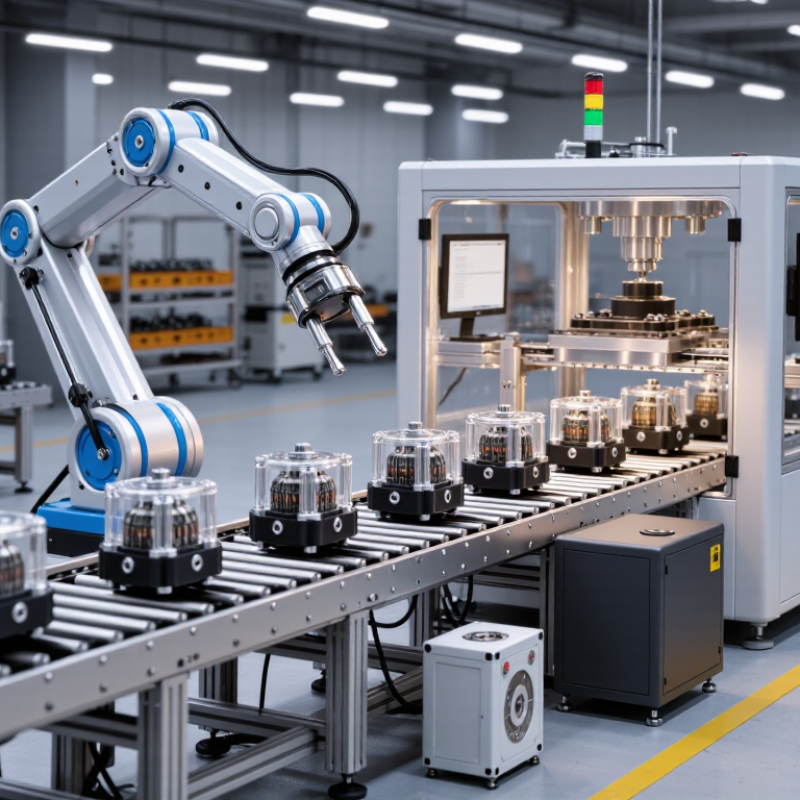
What Is Wiper Motor Equipment and Why Does It Matter?
What is wiper motor equipment? It is the powered system that moves windshield wipers across the glass. The equipment includes a motor, gearbox, linkage, control module, and testing fixtures. A supplier must control speed, torque, noise, vibration, and current consumption. Small errors can create uneven wiping, delayed movement, or visible blind spots.
The need is global and measurable. OICA’s 2023 production report recorded about 93.5 million motor vehicles worldwide. Each vehicle requires dependable visibility equipment, including wiper motor systems. The World Health Organization estimates that road crashes cause approximately 1.19 million deaths annually. Poor wiper performance does not cause every crash, but reduced visibility increases driving risk during rain, snow, and road spray. That link deserves careful engineering, not marketing claims.
Professional buyers should review endurance-test results, salt-spray data, temperature cycling, and electrical-load records. These documents reveal more than a polished catalog. Production equipment should also support repeatable assembly and traceable quality checks. The SAE J903 standard describes test considerations for windshield wiping systems, helping engineers compare performance consistently. Yet compliance alone is not enough. A motor may pass laboratory testing and still struggle with ice, dust, or aging grease. Supplier audits, sample testing, and field feedback remain necessary. That practical gap is easy to underestimate.
What Are China’s Top Wiper Motor Equipment Suppliers?
Wiper motor equipment includes endurance benches, load and torque testers, environmental chambers, electrical test systems, and ingress-protection test fixtures. These tools help verify reliable operation under rain, dust, vibration, temperature changes, and repeated wiping cycles.
Why it matters: The chart compares common IP protection targets used when evaluating wiper motor assemblies. The first digit measures protection against solid particles, while the second digit measures protection against water. Higher ratings generally indicate stronger resistance, although the correct specification depends on the vehicle application and test requirements.
How to Identify China’s Leading Wiper Motor Equipment Suppliers
Identifying China’s leading wiper motor equipment suppliers requires more than comparing online prices. Examine their factory capability, engineering team, and production history. A reliable supplier should explain winding machines, assembly stations, balancing tools, and end-of-line testers clearly. Ask for equipment drawings, cycle times, motor compatibility, and tolerance ranges. Vague answers deserve caution.
Request evidence from similar projects. This may include factory photographs, test reports, installation records, and customer references. Check whether the supplier can produce sample parts before full equipment delivery.
Watch the details: cable routing, sensor calibration, emergency stops, and access for maintenance. These small features affect downtime and operator safety. Documentation matters.
Visit the facility when possible. Observe machine cleanliness, spare-parts storage, software control, and actual debugging work. Speak with technicians, not only sales staff. Confirm training hours, response times, warranty coverage, and remote support arrangements. A capable supplier should also adapt fixtures for different motor sizes without excessive redesign.
No checklist is perfect. I would still review payment terms, delivery milestones, inspection standards, and total operating costs carefully. The lowest quotation may hide expensive tooling changes or slow after-sales service. Supplier rankings can also become outdated, so verify current capacity instead of trusting old certificates or polished brochures.
What Products and Manufacturing Capabilities Do Top Suppliers Offer?
China’s top wiper motor equipment suppliers usually offer complete systems, not motors alone. Their product ranges may include 12-volt and 24-volt motors, worm gears, park switches, drive arms, and linkage assemblies. Some suppliers also develop front and rear wiper units for passenger vehicles, buses, trucks, and specialty equipment.
Manufacturing capability often separates experienced suppliers from simple trading companies. Strong factories use automatic coil winding, CNC machining, metal stamping, plastic injection molding, and controlled assembly lines. They test torque, current draw, noise, waterproofing, temperature resistance, and parking accuracy. End-of-line testing can record each motor’s performance through a traceable production code. This detail matters during vehicle validation and later warranty analysis.
A reliable supplier should support sample development, drawing review, fixture design, and small-batch trials. Engineering teams may adjust gear ratios, shaft dimensions, connector layouts, or mounting points for a specific vehicle platform. Ask for material certificates and inspection records.
Do not trust polished catalogs alone. A factory may claim full production while outsourcing critical gears or electronic parts. I have found that audit evidence often tells a different story. Production capacity can also change during peak seasons. Clear inspection standards, realistic lead times, and responsive technical communication are stronger indicators of reliability than a low quotation. Some suppliers still need improvement in documentation, testing depth, or after-sales feedback systems.
How Do Chinese Suppliers Compare on Quality, Cost, and Delivery?
China’s leading wiper motor equipment suppliers should be compared through quality, cost, and delivery evidence, not catalog size. The China Association of Automobile Manufacturers reported 31.28 million vehicle units produced in 2024. This scale supports strong tooling experience and broad component capacity. However, volume does not guarantee stable motor torque, low noise, or reliable park-position accuracy.
Quality needs measurable proof. Ask for IATF 16949 certification, process capability data, endurance-test records, and PPAP files. Check samples at cold start, high humidity, and repeated wiping cycles. A lower-cost quotation can hide weaker magnets, thinner shafts, or inconsistent grease. The gap is real. My comparison remains imperfect because supplier test conditions are rarely identical.
Cost should include molds, testing, packaging, warranty risk, and spare parts. Delivery also depends on capacity planning and port performance. The World Bank’s 2023 Logistics Performance Index ranked China 19th, with a score of 3.7 out of 5. That indicates strong logistics infrastructure, but it does not prove every factory ships on time. Request a production schedule, safety-stock policy, and recent on-time delivery records. Delivery still varies. For a fair shortlist, compare identical specifications, inspection standards, annual volume, and agreed lead times. A supplier offering transparent corrective-action reports may deserve more trust than one offering the lowest price.
What Are China Top Wiper Motor Equipment Suppliers? - How Do Chinese Suppliers Compare on Quality, Cost, and Delivery?
Anonymous comparison of common Chinese supplier profiles for automotive wiper motor equipment and components
| Supplier Profile | Typical Product Focus | Quality Position | Typical Unit Cost* | Typical Lead Time* | Common MOQ | Warranty Range | Best Fit |
| Tier 1 OEM-Oriented Manufacturer | Vehicle-specific wiper motors, assemblies, and customized drive systems | High | US$18–45 | 45–90 days | 500–2,000 units | 12–24 months | Automotive manufacturers and long-term programs |
| Established Aftermarket Manufacturer | Replacement wiper motors for passenger vehicles and light commercial vehicles | Medium–High | US$10–28 | 25–60 days | 100–500 units | 12 months | Importers, distributors, and repair networks |
| High-Volume Cost-Focused Factory | Standardized motors, gearboxes, and high-volume replacement parts | Medium | US$7–18 | 20–45 days | 500–3,000 units | 6–12 months | Price-sensitive buyers with stable demand |
| Small-Batch Custom Supplier | Low-volume customized motors, mounting interfaces, connectors, and wiring | Medium–High | US$20–60 | 35–75 days | 50–300 units | 12 months | Prototype projects and niche vehicle applications |
| Trading and Sourcing Company | Mixed catalogs sourced from multiple factories; standard replacement products | Variable | US$9–30 | 30–65 days | 50–500 units | 6–12 months | Buyers needing supplier consolidation and product variety |
*Data basis: Indicative market ranges for commonly traded 12 V and 24 V automotive wiper motor products. Actual pricing and lead time vary according to vehicle application, testing requirements, tooling, order quantity, Incoterms, packaging, and shipping method.
Verification checklist: Request ISO 9001 or IATF 16949 evidence where applicable, product drawings, dimensional inspection reports, endurance-test results, sample approval records, connector specifications, and a written warranty policy before placing an order.
What Should Buyers Check Before Choosing a Supplier?
When comparing China’s top wiper motor equipment suppliers, buyers should inspect more than product photos and factory size. Ask for test records covering torque, voltage stability, noise, heat rise, and continuous operating cycles. A motor that performs well for ten minutes may fail after several hours.
Check whether the supplier controls key processes in-house. These include winding, gear assembly, sealing, calibration, and final inspection. Request material certificates, process flow charts, and batch traceability records. The equipment should match your required output, not merely the supplier’s standard configuration. Examine fixture accuracy, sensor quality, software control, and spare-part availability. Small details matter.
Visit the production line if possible. Look for organized workstations, calibrated instruments, and clear inspection points. Ask how the supplier handles defective parts and design changes. A reliable supplier should provide samples, validation reports, installation guidance, and realistic delivery dates. Confirm warranty terms in writing, including response time and replacement procedures. Communication can reveal much. Slow answers may signal future delays.
Do not rely only on the lowest quotation. A cheaper machine may require frequent manual adjustment, causing hidden labor costs. Also check export documents, electrical compatibility, safety protection, and after-sales support for your destination market. One practical weakness is often overlooked: buyers may test equipment with ideal samples only. Use production-grade materials instead. Performance can change.
