Blog
10 Best Galvanized Pipe Suppliers for Global Buyers
Choosing reliable suppliers is rarely as simple as comparing galvanized pipe prices. Global buyers must examine coating quality, dimensional accuracy, production capacity, and export experience. A polished website proves very little. Factory evidence matters more.
This guide introduces 10 Best Galvanized Pipe Suppliers for Global Buyers, based on practical purchasing concerns. These include material traceability, zinc coating thickness, welding consistency, packaging, and delivery performance. Buyers should request mill test certificates, inspection reports, and clear product specifications before placing substantial orders. Standards such as ASTM A123, ASTM A53, EN 10240, and ISO 1461 may apply, but requirements can differ by project and destination.
Details reveal supplier reliability. Look for bundled pipes protected with waterproof wrapping, legible heat numbers, clean threaded ends, and pallets that can survive ocean handling. An experienced supplier should explain tolerances, coating repair methods, and testing procedures without avoiding difficult questions. References from comparable infrastructure or construction projects also add useful confidence.
Still, no supplier ranking can fit every buyer. A contractor in Kenya may value flexible container loading, while a distributor in Germany may prioritize certification and consistent batch control. Some information can change quickly, including capacity, prices, and lead times. Treat this list as a practical starting point, not a final decision. Verify independently. That step is easy to skip. It can also prevent expensive surprises.
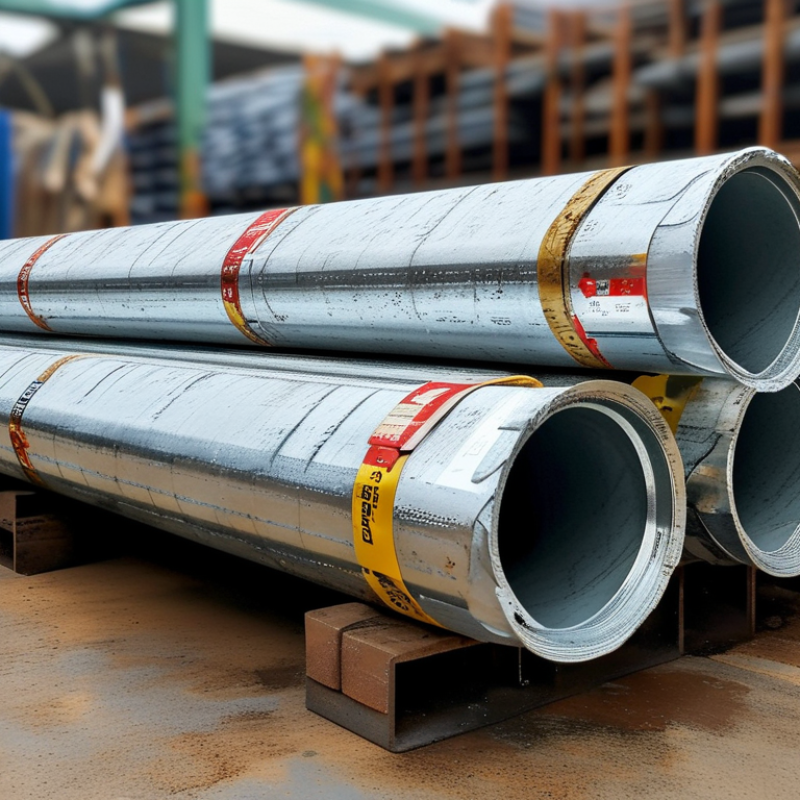
What Makes a Galvanized Pipe Supplier Reliable for Global Buyers
A reliable galvanized pipe supplier does more than offer a low price. Global buyers need clear evidence before placing an order. In project reviews, I check whether the supplier explains pipe grades, dimensions, zinc coating, and tolerance limits. The information should match the purchase specification. Photos are not enough. A dependable supplier provides current test reports and mill certificates linked to each heat number. This makes the material easier to trace if questions arise later.
Quality control should be visible in small details. Ask how the supplier checks coating thickness, thread accuracy, straightness, and surface defects. A professional team can describe its sampling method without avoiding technical questions. Independent inspection should also be available when the project requires it.
Packaging matters too. Bundled pipes need strong straps, protective separators, and sealed ends. Otherwise, rough handling or sea moisture may damage usable products.
Reliable communication is equally important for international buyers. The supplier should confirm production dates, packing lists, shipping documents, and delivery terms in writing. Responses should remain consistent across sales, quality, and logistics teams. No supplier is perfect. That is normal. I become cautious when a supplier promises zero delays or refuses to discuss possible defects. A short trial order can reveal more than a polished presentation. It tests measurement accuracy, packaging strength, document quality, and response speed under real conditions.
Key Criteria for Comparing Galvanized Pipe Manufacturers and Exporters
Global buyers should compare galvanized pipe suppliers through measurable evidence, not catalog promises. The World Steel Association reported 1.84 billion tonnes of crude steel production in 2024. That scale supports broad sourcing, but it does not prove consistent pipe quality. Request mill certificates, heat numbers, dimensional reports, and recent third-party inspection records. Check outside diameter, wall thickness, ovality, thread quality, and bundle protection. Small gaps matter.
Coating performance needs equal attention. Under ISO 1461, steel sections over 6 millimeters generally require an average zinc coating thickness of 85 micrometers, with a 70-micrometer local minimum. Confirm whether the supplier tests coating mass, thickness, adhesion, and appearance. A bright surface can still hide thin coverage. For pressure applications, compare the actual pipe standard, hydrostatic test pressure, and permissible tolerances; ISO 1461 alone does not confirm pressure performance. This distinction is often missed.
Export capability is more than low pricing. Review production capacity, monthly delivery records, port options, packaging photographs, insurance practice, and document accuracy. The World Bank’s Commodity Markets Outlook shows continued volatility across industrial metals, so fixed prices deserve careful qualification. Ask whether quotations include zinc fluctuations, inspection fees, and inland transport. Audit a sample batch before a large order. It costs time, but rejected pipe costs more. Supplier rankings can help, yet my experience suggests that transparent evidence remains the stronger filter.
Top Galvanized Pipe Suppliers by Product Range and Market Reach
Global buyers often compare galvanized pipe suppliers by more than price. Product range and market reach reveal a supplier’s real capability. Strong suppliers usually offer hot-dip galvanized and electro-galvanized options. Some also provide round, square, rectangular, and threaded pipes.
A broad product range supports construction, agriculture, fencing, plumbing, and industrial projects. Ask about zinc coating thickness, outside diameter, wall thickness, and pipe length. Reliable suppliers should provide mill certificates, coating test results, and clear dimensional tolerances. Market reach matters too. Suppliers serving multiple regions often understand container loading, export packaging, customs documents, and port schedules. Still, wider reach does not guarantee better service. I have seen large exporters overlook small specification changes.
Tips: Request a sample before placing a large order. Check the surface for bare spots, peeling, and uneven coating. Confirm whether the quoted weight includes packaging. Compare delivery terms, not only the unit price. A supplier with fewer products may offer better technical support. This is easy to miss. Review production capacity during peak seasons, because delays can affect installation schedules. Also verify communication speed and after-sales handling. A dependable contact who answers precise questions is valuable. Avoid relying on polished catalogs alone; factory evidence, inspection records, and consistent shipment history provide stronger proof.
10 Best Galvanized Pipe Suppliers for Global Buyers
Top Galvanized Pipe Suppliers by Product Range and Market Reach
This market-neutral benchmark compares commonly traded galvanized steel pipe sizes by nominal diameter and approximate outside diameter. These standard dimensions are widely used across plumbing, water supply, structural, agricultural, and industrial applications. Actual product availability, coating class, wall thickness, and certifications vary by supplier and destination market.
International Standards, Quality Control, and Certification Requirements
For global buyers, a reliable galvanized pipe supplier must understand international standards, not merely offer a low quotation.
Common specifications include ASTM A53, EN 10255, and ISO 1461, but the correct choice depends on pressure, application, and destination. Buyers should request the exact standard edition, steel grade, pipe dimensions, and galvanizing method before placing an order.
Quality control should cover every production stage.
Inspectors can verify chemical composition, wall thickness, outside diameter, zinc coating thickness, adhesion, and thread accuracy. A practical inspection may include random sampling, hydrostatic testing, and visual checks for bare spots or excessive zinc lumps. Mill test certificates should match the heat number printed on the bundle. Small details matter.
Certification needs careful review.
An ISO 9001 certificate supports a supplier’s quality system, but it does not prove that every shipment meets the purchase specification. Certificates should come from recognized bodies and remain valid on the inspection date. Depending on the market, buyers may also need third-party inspection reports, conformity documents, packing records, and traceability files. Local import rules can change. A certificate alone is not enough.
Some suppliers provide impressive documents but weak production records, so an on-site audit or independent inspection remains worthwhile. Mistakes still happen, especially with mixed bundles and copied test data. Clear contracts, approved samples, and shipment photographs reduce that risk.
How to Select the Right Galvanized Pipe Supplier for Your Project
Choosing a galvanized pipe supplier starts with the project, not the catalog. Define diameter, wall thickness, connection type, pressure rating, and service environment. A greenhouse line needs different protection from buried water infrastructure. Ask how zinc coating is measured and reported. Request coating mass, test methods, and dimensional tolerances. Do not accept “heavy duty” as a technical specification. Precise documents matter.
Look for traceable mill certificates, inspection records, and consistent batch marking. An experienced supplier should explain standards in plain language. They should identify limits, including welding damage and exposed threaded ends. Request a sample before approving a large order. Check thread fit, coating uniformity, straightness, and packaging. Small defects become expensive on site. Review production capacity, lead times, export packing, and replacement procedures. A written inspection plan reduces misunderstandings.
Compare total delivered cost, not only unit price. Include cutting, threading, testing, freight, duties, and payment terms. Confirm shipping responsibilities before signing. Ask for loading photos and moisture protection details. A supplier can be technically strong but weak in communication. I once underestimated packaging, and surface damage appeared after a long sea shipment. That mistake changed my checklist. No checklist is perfect. Leave room for independent inspection and a realistic production schedule. The supplier should answer difficult questions before payment, not after a complaint.
10 Best Galvanized Pipe Suppliers for Global Buyers - How to Select the Right Galvanized Pipe Supplier for Your Project
An anonymized supplier comparison based on commonly requested international specifications, export capabilities, quality documentation, and project suitability.
| Rank | Supplier Profile | Primary Supply Region | Core Product Range | Common Standards | Typical Size Range | Galvanizing Method | Typical Zinc Coating | End Finish Options | Typical MOQ | Indicative Lead Time | Export Documentation | Best Project Fit | Selection Rating |
|---|---|---|---|---|---|---|---|---|---|---|---|---|---|
| 1 | Supplier Profile A | East Asia | Hot-dip galvanized welded steel pipe; scaffolding and structural pipe | ASTM A53, ASTM A795, EN 10255, ISO 1461 | DN15–DN300; 1/2–12 in | External and internal hot-dip galvanizing | Typically 300–600 g/m², subject to specification | Plain, threaded, grooved, beveled | Usually 1–2 containers per size mix | 25–45 days after order confirmation | Mill test certificate, packing list, commercial invoice, certificate of origin | Large-volume infrastructure and building projects | ★★★★★ |
| 2 | Supplier Profile B | South Asia | Galvanized water pipe, conduit pipe, and light structural tubing | ASTM A53, BS 1387, EN 10255, IS 1239 | DN15–DN200; 1/2–8 in | Batch hot-dip galvanizing | Typically 275–500 g/m² | Plain, threaded with couplings, capped | 10–25 metric tons | 30–50 days | Mill test certificate, dimensional report, inspection certificate | Commercial plumbing and utility distribution | ★★★★★ |
| 3 | Supplier Profile C | Middle East | Heavy-wall galvanized line pipe and fire-protection pipe | ASTM A53, ASTM A795, NFPA 13 project requirements | DN25–DN300; 1–12 in | Hot-dip galvanizing after pipe forming | Typically 350–600 g/m² | Plain, grooved, roll-grooved, beveled | 20–50 metric tons | 35–60 days | Mill test certificate, coating report, hydrostatic test report | Fire sprinkler, HVAC, and mechanical services | ★★★★★ |
| 4 | Supplier Profile D | Eastern Europe | European-standard galvanized precision and general-purpose pipe | EN 10255, EN 10240, ISO 1461, ISO 9001 quality systems | DN15–DN165; 1/2–6 in | Hot-dip galvanizing with controlled coating process | Typically 275–500 g/m² | Plain, threaded, socketed, beveled | 15–30 metric tons | 30–55 days | EN conformity documents, mill certificate, dimensional inspection report | European construction and industrial maintenance | ★★★★☆ |
| 5 | Supplier Profile E | Southeast Asia | Light and medium-duty galvanized pipe for water and general fabrication | ASTM A53, JIS G3442, EN 10255 | DN15–DN250; 1/2–10 in | Hot-dip galvanizing; optional pre-galvanized tubing | Typically 200–450 g/m² | Plain, threaded, grooved, capped | 10–20 metric tons | 25–45 days | Mill test certificate, packing list, fumigation certificate where required | Residential plumbing and general fabrication | ★★★★☆ |
| 6 | Supplier Profile F | North Africa | Galvanized structural tubes, fencing pipe, and water-service pipe | EN 10255, ASTM A53, ISO 1461 | DN20–DN200; 3/4–8 in | Batch hot-dip galvanizing | Typically 275–500 g/m² | Plain, threaded, welded fittings available | 15–40 metric tons | 35–60 days | Mill test certificate, coating inspection, certificate of origin | Fencing, agricultural systems, and local utilities | ★★★★☆ |
| 7 | Supplier Profile G | Latin America | Galvanized mechanical pipe and medium-duty structural tube | ASTM A53, ASTM A500, ISO 1461 | DN15–DN250; 1/2–10 in | Hot-dip galvanizing after fabrication | Typically 275–550 g/m² | Plain, beveled, grooved, threaded by request | 10–30 metric tons | 30–55 days | Mill test certificate, tensile data, dimensional report | Industrial buildings and mechanical installations | ★★★★☆ |
| 8 | Supplier Profile H | Central Asia | Large-diameter galvanized pipe for water, construction, and public works | ASTM A53, EN 10255, API 5L where specifically applicable | DN50–DN400; 2–16 in | Hot-dip galvanizing for compatible pipe sizes | Typically 300–600 g/m² | Plain, beveled, grooved | 30–80 metric tons | 40–70 days | Mill test certificate, hydrostatic test report, loading photographs | Water transmission and civil engineering projects | ★★★★☆ |
| 9 | Supplier Profile I | Oceania | Galvanized pipe for agricultural, fencing, and light construction applications | AS/NZS 1074, ISO 1461, ASTM A53 by request | DN15–DN150; 1/2–6 in | Hot-dip galvanized or pre-galvanized depending on application | Typically 200–450 g/m² | Plain, threaded, socketed | 5–15 metric tons | 20–40 days | Certificate of conformity, mill certificate, coating documentation | Agriculture, fencing, and small commercial projects | ★★★☆☆ |
| 10 | Supplier Profile J | North America | Specification-grade galvanized pipe for commercial and industrial use | ASTM A53, ASTM A795, ASTM A123 where applicable | DN15–DN300; 1/2–12 in | Hot-dip galvanizing with project-specific inspection | Typically 300–600 g/m² | Plain, threaded, grooved, beveled | 5–20 metric tons | 15–35 days for stock items | Mill test certificate, traceability records, inspection report | Time-sensitive commercial and industrial projects | ★★★☆☆ |
Buyer note: Zinc coating values, minimum order quantities, lead times, available sizes, and certification options are indicative industry benchmarks. Confirm the applicable standard, wall thickness, coating requirement, test plan, packaging, and delivery terms with the selected supplier before placing an order.