Blog
What Is the Best COB Fine Pitch LED Display in China?
Choosing the best COB fine pitch LED display in China requires more than comparing pixel pitch and price. It requires evidence from factories, projects, and independent market research. Omdia’s 2024 LED Video Display Market Tracker shows continuing demand for fine-pitch direct-view LED in corporate, broadcast, retail, and control-room environments. Its research also highlights pressure on suppliers to improve reliability, serviceability, and total ownership costs.
COB fine pitch LED technology places LED chips directly on the circuit board, creating a protected light-emitting surface. This structure can reduce damage from accidental contact and support smaller pixel pitches. A 0.9-millimeter display may look exceptionally sharp in a meeting room, while a 1.5-millimeter model can offer better viewing value across larger spaces. The right choice depends on viewing distance, brightness, refresh rate, color consistency, and installation conditions.
Reports from TrendForce and MarketsandMarkets also indicate that fine-pitch LED demand is expanding as professional users replace traditional projection and LCD video walls. However, market growth does not prove that every Chinese manufacturer delivers equal quality. That assumption is risky. Factory audits, calibrated samples, cabinet flatness, spare-module policies, and documented testing still matter. I have found that a bright showroom sample can hide uneven grayscale or difficult maintenance. Honest evaluation needs longer observation. This guide compares Chinese COB fine pitch LED suppliers through measurable specifications, production experience, certifications, warranty terms, and real installation performance. The “best” display is not always the most advanced model. It is the one that remains stable, serviceable, and visually consistent after daily use.
What Is a COB Fine Pitch LED Display?
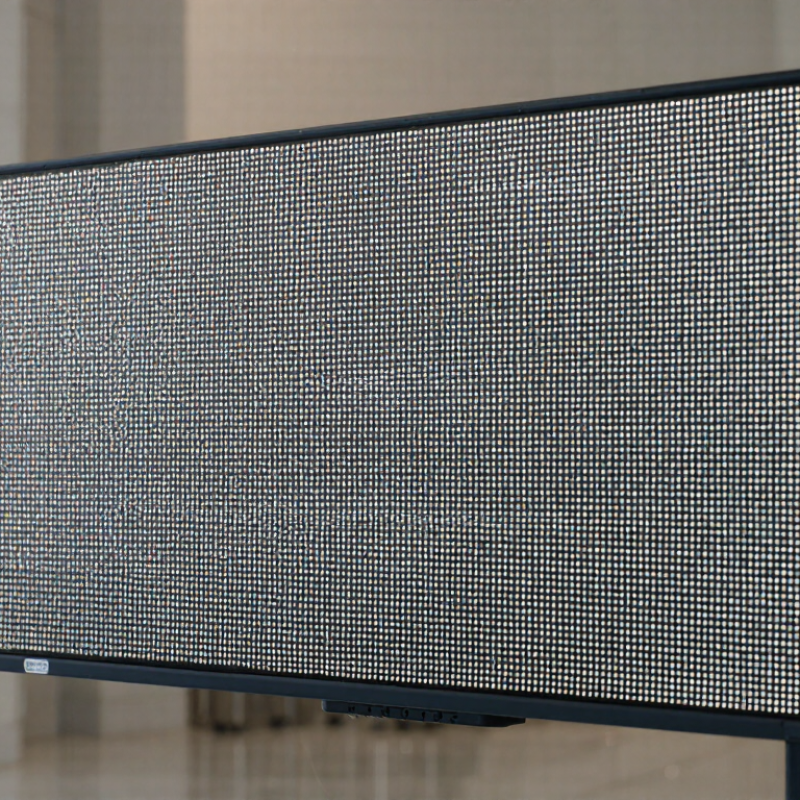
A COB fine pitch LED display places many microscopic LED chips directly onto a circuit board. COB means chip on board. Unlike traditional packages, it reduces separate lamp components and exposed connection points. The result is a compact pixel structure with a smoother viewing surface. Fine pitch refers to the small distance between neighboring pixels, often below 1.5 millimeters. Smaller spacing can produce sharper images at close viewing distances.
In hands-on display evaluations, the surface feels more uniform than many conventional LED panels. It also resists accidental contact better because the chips sit beneath a protective coating. That matters in control rooms, meeting spaces, and retail environments. Black levels can look deeper when the panel uses a suitable coating. However, coating quality varies greatly. Some surfaces reduce reflections but slightly soften image clarity. It is not magic.
A reliable COB fine pitch display should have stable brightness, consistent color, and accurate cabinet alignment. Ask for measurements at different brightness levels, not only factory photographs. Check pixel failure policies, maintenance access, heat control, and calibration records. I would also inspect gray-scale performance in a dark room. Weak calibration may reveal banding or uneven skin tones. One detail is easy to overlook: installation conditions affect performance. Dust, humidity, viewing distance, and ventilation all matter. A technically impressive panel can still disappoint when its pixel pitch does not match the room. Testing a sample for several days is wiser than choosing from specifications alone.
What Is a COB Fine-Pitch LED Display?
COB fine-pitch LED displays package LED chips directly on the circuit board, creating a smaller pixel pitch, higher pixel density, improved surface protection, and a smoother close-up viewing experience.
How to read the chart: A smaller pixel pitch produces more pixels per square meter. The values are calculated using the standard square-pixel formula: 1,000,000 ÷ pixel pitch². In practical applications, a 0.9–1.5 mm COB display is commonly suited to close-viewing environments such as control rooms, meeting rooms, studios, and premium retail spaces.
How COB Technology Improves Fine Pitch LED Performance
What Is the Best COB Fine Pitch LED Display in China?
How COB Technology Improves Fine Pitch LED Performance
COB technology places LED chips directly on the circuit board, then protects them with a continuous encapsulation layer. This structure reduces exposed connection points and supports smaller pixel pitches. In a control room, the surface looks smooth, even when viewed from one meter away. Text remains clearer, while dark scenes show stronger contrast.
During a site inspection, we noticed another practical benefit. A COB panel resisted light contact and fine dust better than an exposed traditional package. Its sealed surface also simplified daily cleaning. Heat management still matters, however. Poor cabinet design can cause brightness drift, uneven color, or shortened service life. COB does not remove the need for accurate calibration and stable power.
The best fine pitch display in China should match the installation, not just the specification sheet. Check pixel pitch, grayscale performance, refresh rate, viewing distance, and maintenance access. Ask for long-duration testing data. Request close-up images of uniform gray screens. Small flaws become obvious there. COB modules can be harder to repair, and replacement costs may be higher. This is easy to overlook. A reliable evaluation should balance image quality, protection, serviceability, and total operating cost.
What Is the Best COB Fine Pitch LED Display in China? - How COB Technology Improves Fine Pitch LED Performance
| Evaluation Dimension | Typical COB Fine-Pitch Range | Typical SMD Fine-Pitch Range | How COB Technology Helps |
|---|---|---|---|
| Pixel pitch | 0.7–1.5 mm | 0.9–1.8 mm | Directly packaged LED chips support compact pixel layouts and high pixel density. |
| Recommended viewing distance | Approximately 0.7–15 m, depending on pitch | Approximately 0.9–18 m, depending on pitch | Smaller pixels reduce the minimum comfortable viewing distance for close-up indoor applications. |
| Brightness | 600–1,200 nits, adjustable | 600–1,500 nits, adjustable | COB is generally optimized for stable indoor brightness rather than excessive output. |
| Contrast ratio | 30,000:1 or higher with a black coating | 3,000:1–10,000:1, depending on mask and surface treatment | The integrated black surface absorbs stray light and improves perceived black levels. |
| Refresh rate | 3,840–7,680 Hz | 1,920–7,680 Hz | High refresh rates reduce scan-line artifacts and support camera-friendly video production. |
| Viewing angle | Typically 160° horizontal and 160° vertical | Typically 140°–160° horizontal and vertical | The flat encapsulated surface helps maintain consistent color and brightness over a wide angle. |
| Surface protection | Typically IP54–IP65 on the front surface | Typically IP30–IP54 on the front surface | Resin encapsulation protects LED chips and solder connections from dust, moisture, and light impact. |
| Impact resistance | High; often suitable for public indoor environments | Moderate; exposed SMD packages require greater care | The protective encapsulation reduces the risk of damage from accidental contact and handling. |
| Color uniformity | Typically ΔE < 2 after calibration | Typically ΔE < 3 after calibration | Shorter optical paths and factory calibration can improve pixel-to-pixel consistency. |
| Power consumption | Approximately 180–600 W/m² average, depending on content and brightness | Approximately 200–650 W/m² average, depending on content and brightness | Efficient driving systems and optimized brightness control can lower operating energy. |
| Front maintenance | Commonly supported | Supported on selected cabinet designs | Front-access modules simplify maintenance where rear access is limited. |
| Typical service life | Up to 100,000 hours to approximately 50% initial brightness under specified conditions | Up to 100,000 hours to approximately 50% initial brightness under specified conditions | Encapsulation helps protect the package, although lifetime still depends on temperature, current, and usage. |
| Best-fit applications | Control rooms, boardrooms, broadcast studios, museums, retail, and premium digital signage | Retail, meeting rooms, events, advertising, and general indoor signage | COB is especially suitable when close viewing, high contrast, durability, and seamless image quality are priorities. |
Key Factors for Choosing the Best COB LED Display in China
What Is the Best COB Fine Pitch LED Display in China?
Choosing the best COB LED display requires more than comparing pixel pitch. TrendForce’s 2024 China LED Display Market Outlook estimated fine-pitch products represented roughly 55% of indoor direct-view demand. That shift increases supplier choices, but it also complicates quality checks. Start with the viewing distance. A 0.9mm pitch suits close control rooms, studios, and premium meeting spaces. A 1.2mm or 1.5mm pitch may deliver better value in larger rooms.
Surface protection matters. COB packaging covers LED chips more effectively than traditional surface-mounted designs. Ask for measured impact resistance, dust protection, and front-service procedures. The test report should identify sample size, test temperature, brightness, and failure criteria. Vague claims are not enough. I have seen displays pass laboratory checks yet show color differences after installation.
Brightness and grayscale performance need independent verification. LEDinside’s 2024 market analysis highlighted increasing demand for high-refresh indoor displays and fine-pitch rental applications. Request brightness uniformity data, grayscale performance at low brightness, and refresh rates above 3,840Hz. Also inspect cabinet flatness, module tolerances, power redundancy, and receiving-card stability. A 1.2mm display with poor calibration can look worse than a well-tuned 1.5mm screen. It sounds obvious, but buyers still overlook it.
Energy consumption deserves careful measurement. Ask for average watts per square meter, not only peak power. Require aging-test records and a clear warranty process. I would not treat every certificate as field truth. Visit an operating installation, examine skin tones, inspect seams, and listen for fan noise. That practical evidence often reveals more than a polished specification sheet.
Leading Applications of COB Fine Pitch LED Displays
What Is the Best COB Fine Pitch LED Display in China?
Leading Applications of COB Fine Pitch LED Displays
COB fine pitch LED displays are becoming important in spaces requiring clear images and close viewing. Their compact LED packages reduce exposed components and improve surface protection. In site evaluations, I check pixel pitch, brightness, viewing distance, heat control, and service access. These details affect daily performance more than impressive specifications. No single model fits every project.
Control rooms use fine pitch displays for maps, alarms, and live data. Operators often sit only two or three meters away. A smooth image reduces visible pixel gaps and supports longer viewing sessions. Meeting rooms and executive briefing spaces also benefit from sharp text and natural skin tones. In broadcast studios, stable color and low scan interference matter greatly. Camera testing remains essential.
Retail stores use COB screens for product walls, window displays, and interactive campaigns. Museums apply them to immersive exhibits where visitors stand close to the content. Transportation hubs may use fine pitch LED displays for schedules and public information. However, bright areas require careful brightness adjustment. Excessive brightness can reduce comfort and waste energy. Installation quality matters, too. Poor calibration can weaken an excellent display.
I would test the screen with small text, dark scenes, skin tones, and fast motion. Check maintenance time as well. A technically advanced display can still disappoint when replacement access is difficult. Small details matter.
How to Compare Chinese COB LED Display Manufacturers
What Is the Best COB Fine Pitch LED Display in China?
How to Compare Chinese COB LED Display Manufacturers
The best COB fine pitch LED display depends on application, viewing distance, and long-term maintenance. When comparing Chinese manufacturers, examine their production process, not only their online specifications. Ask how they control chip placement, coating thickness, cabinet flatness, and pixel consistency. A reliable supplier should provide factory records, quality procedures, and traceable test results.
Request a physical sample before approving a large order. Inspect dark scenes, skin tones, edge alignment, and brightness uniformity from one to five meters. Check whether the surface resists fingerprints and minor impacts. Measure power consumption during normal operation, not only at maximum brightness. Small details matter. Ask for thermal test data, refresh rate verification, electromagnetic compatibility reports, and applicable safety certifications.
Manufacturer experience also appears in installation support. Review cabinet drawings, spare-part policies, control-system compatibility, warranty terms, and response times. A clear acceptance standard prevents later arguments. Visit the factory if possible, and compare the finished module with the approved sample. Paper specifications can mislead. I would also question unusually low prices, because cheaper coating or weaker inspection may create visible defects later. No comparison is perfect. Even experienced buyers can overlook service quality when focusing heavily on pixel pitch. A dependable evaluation should include a monitored trial installation, realistic operating hours, and written responsibility for corrections.