
What Is the Best China Electric City Bike for Global Buyers?
Choosing the best China electric city bike for global buyers is not simply a price comparison. It is a practical decision about comfort, safety, service, and daily reliability. A model that looks impressive in a factory showroom may feel heavy on a narrow European cycle lane. Another may perform well in a warm coastal city but struggle on steep roads or in winter rain.
Richard Peace, a long-time electric bicycle journalist and author, says, “The best e-bike is the one you will actually ride.” That simple idea matters. Buyers should examine the frame size, riding position, battery capacity, motor response, braking system, and charging design. A comfortable saddle and bright integrated lights can matter more than a higher top speed. Real experience often exposes details that product pages hide.
Small details matter.
This guide will compare China-made electric city bike options through a global buyer’s perspective. It will consider urban commuting, battery range, component quality, warranty support, replacement parts, and shipping practicality. It will also discuss differences between hub motors and mid-drive systems, because each suits different streets and riders. Certification and local road requirements must be checked before purchase. They vary by market.
There is no perfect model. Some affordable bikes use attractive components but provide limited after-sales support. Some premium bikes offer stronger quality control but lose their value after international shipping and taxes. Buyers may also overestimate advertised range. Cold weather, hills, rider weight, and frequent stops reduce it. A careful choice begins with honest expectations, not a glossy specification sheet.
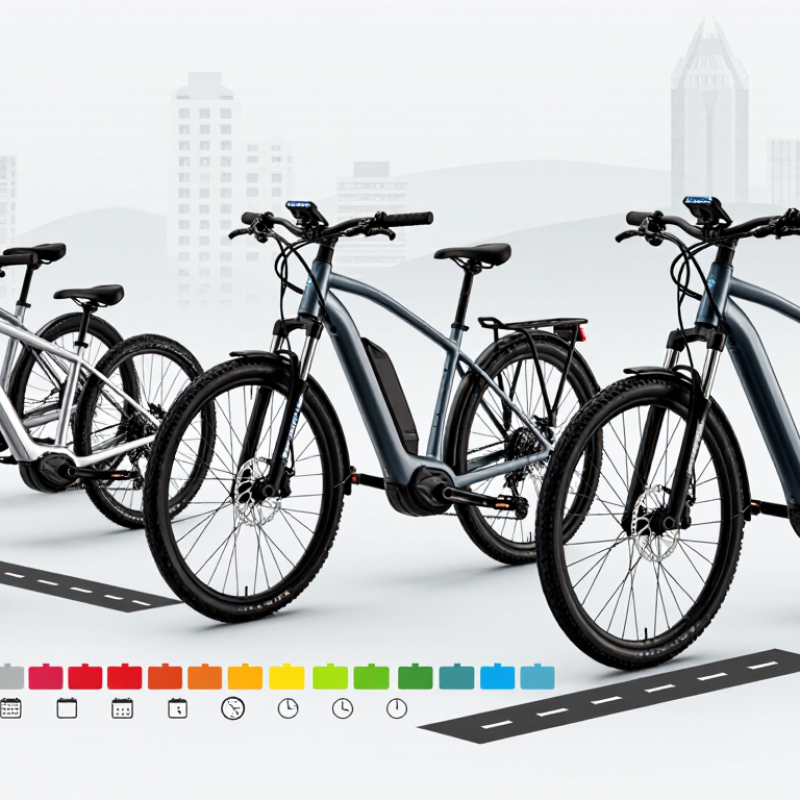
Define the China Electric City Bike: EU EPAC Limits of 250 W and 25 km/h
For global buyers, a China electric city bike should begin with the EU EPAC definition, not its marketing name. Under Regulation (EU) No 168/2013, pedal assistance must use a motor with a maximum continuous rated power of 250 W. Assistance must stop when pedaling stops and before the bicycle reaches 25 km/h. Peak output may be higher, but it does not redefine the legal 250 W rating.
This distinction matters on ordinary streets. At 24 km/h, a compliant bike should gradually stop assisting near the limit, while the rider can continue using leg power. A throttle-only model may look convenient, yet it may not fit the EPAC category. Buyers should request the technical file, motor rating method, controller settings, battery documentation, and conformity evidence. EN 15194 testing is useful, but a CE mark remains a manufacturer’s declaration, not an independent quality certificate.
Market demand supports careful specification. The Confederation of the European Bicycle Industry reported roughly five million e-bikes sold in Europe during 2022. That volume increases scrutiny from retailers, insurers, and regulators. In my experience, sellers often describe “250 W” without explaining continuous or peak power. That is a weak point. A better city bike combines predictable assistance, strong braking, visible lighting, and a removable battery with traceable cells. Range claims still need caution; rider weight, hills, temperature, and tire pressure can change real results sharply. Specification sheets are helpful, but they are not field evidence.
What Is the Best China Electric City Bike for Global Buyers? — Define the China Electric City Bike: EU EPAC Limits of 250 W and 25 km/h
A practical comparison framework for evaluating electric city bikes made in China. For an EU EPAC, check the applicable rules and conformity documents for the exact model and configuration—not just the product description.
| Evaluation Dimension | What to Check | Useful Reference or Example | Why It Matters to Global Buyers |
|---|---|---|---|
| EU EPAC motor rating | Confirm the motor’s maximum continuous rated power and how the rating is documented. Do not rely on a peak-power figure alone. | For the EU EPAC exclusion from type approval, the auxiliary motor’s maximum continuous rated power must not exceed 250 W. | A model advertised with a compliant peak figure may still need its continuous rated power verified. Other markets may apply different classifications. |
| Pedal-assistance speed limit | Verify the assistance cut-off behavior using the supplied display, controller, wheel size, and production configuration. | For an EU EPAC, motor assistance must be cut off when the rider stops pedaling and progressively reduced and finally cut off before the cycle reaches 25 km/h. | Changing controller settings or components can affect whether the finished bicycle meets the intended specification. |
| Pedal-assistance operation | Check whether motor assistance is linked to pedaling and whether any walk-assist function is separately described and configured. | EU EPAC rules specify assistance linked to pedaling, with assistance cut off when pedaling stops. | Clear operating instructions help buyers assess the product’s intended category and reduce confusion about throttle operation. |
| Battery capacity | Compare nominal voltage, ampere-hours, watt-hours, removable design, and the supplier’s stated test basis. | Nominal energy in watt-hours is approximately voltage × ampere-hours; for example, 36 V × 10 Ah = 360 Wh. | Watt-hours make battery capacity easier to compare. Actual range also depends on terrain, rider and cargo weight, temperature, assist level, and riding style. |
| Range claims | Ask for the test conditions behind the quoted range, including load, route, temperature, speed, and assistance level. | Present range as a test-dependent estimate rather than a guaranteed distance. | Consistent test conditions make comparisons more meaningful and help set realistic customer expectations. |
| Braking and handling | Review brake type, wheel and tire specification, maximum permitted load, and stopping-performance test information for the intended market. | Request test records for the complete bicycle configuration, not only individual components. | Braking performance and handling depend on the assembled bicycle and its use, including rider and cargo weight. |
| Frame fit and comfort | Compare frame sizes, step-through or crossbar access, handlebar position, saddle adjustment, and approved load limits. | Request a geometry chart with frame dimensions and recommended rider-height guidance. | Fit affects comfort, control, and suitability for different riders and commuting conditions. |
| Weather protection | Ask for documented ingress-protection ratings, test conditions, and care instructions for the battery, display, controller, and connectors. | Do not assume that an IP rating for one electrical component applies to the complete bicycle. | Evidence specific to each component helps buyers assess suitability for wet-weather use and maintenance requirements. |
| EU documentation | Request the applicable EU Declaration of Conformity, technical documentation, and evidence supporting the exact model and configuration. | Check the applicable EU legislation and standards for the product and market; a supplier statement alone is not a substitute for the required documentation. | Complete, consistent documentation supports market-access checks and product traceability. |
| Battery transport and shipping | Confirm battery chemistry, packaging, transport classification, and the test documents requested by the chosen carrier or route. | For lithium batteries, transport requirements can depend on the battery and shipment; request applicable UN 38.3 test-summary information. | Battery shipment can involve requirements beyond ordinary bicycle freight. Verify them before booking transport. |
| Parts and after-sales support | Confirm availability of compatible batteries, chargers, displays, controllers, brake parts, and service documentation. | Ask for a parts list, compatibility details, warranty terms, and a defined process for technical support. | Serviceability and spare-parts access influence the cost and practicality of supporting bikes after delivery. |
| Best-fit buying decision | Choose the model whose verified specification, documentation, fit, service plan, and intended-market configuration match the buyer’s requirements. | For EU city use, prioritize verifiable 250 W maximum continuous rated power and assistance behavior that meets the 25 km/h EPAC limit. | There is no single best model for every buyer; compliance evidence and real-world suitability should be checked together. |
Note: The EU EPAC limits shown are regulatory criteria, not a complete compliance checklist. Rules differ by destination market and may change. Confirm current local requirements and the documentation for the specific bicycle before purchase, import, or sale.