
2026 Best Non Aging Foam Sandwich Panel for Global Buyers?
Global construction is moving toward lighter, faster, and more energy-efficient building systems. In this market, the Non-Aging Foam Sandwich Panel is gaining attention among cold-storage, industrial, agricultural, and modular-building buyers. Grand View Research has identified continued growth in global sandwich panel demand, supported by prefabrication, insulation upgrades, and stricter energy-performance expectations. MarketsandMarkets also reports rising demand for insulated panels in warehouses, refrigeration facilities, and controlled environments.
Performance, however, depends on more than a product label. A reliable panel requires stable foam density, consistent core thickness, strong adhesion, and durable facing materials. At the factory, buyers should inspect panel edges, joint tolerances, surface flatness, and thermal conductivity records. A 100-millimeter panel should not show visible gaps when two sections meet. Small gaps can become costly heat bridges.
The phrase “non-aging” also needs careful interpretation. No insulation remains unchanged under every temperature, moisture, chemical, and loading condition. This point is sometimes overlooked. Buyers should request tested aging data, fire classification, water absorption results, and dimensional-stability reports. ASTM, EN, and ISO test references can improve comparison across suppliers, but certificates must match the actual panel design.
This 2026 guide evaluates leading options for global buyers through measurable criteria: insulation performance, service life, fire safety, environmental resistance, installation quality, and total ownership cost. It also considers shipping realities, local climate, replacement access, and supplier experience. The best panel is not always the cheapest. It is the panel that performs reliably after years of daily use.
What Is a Non-Aging Foam Sandwich Panel?
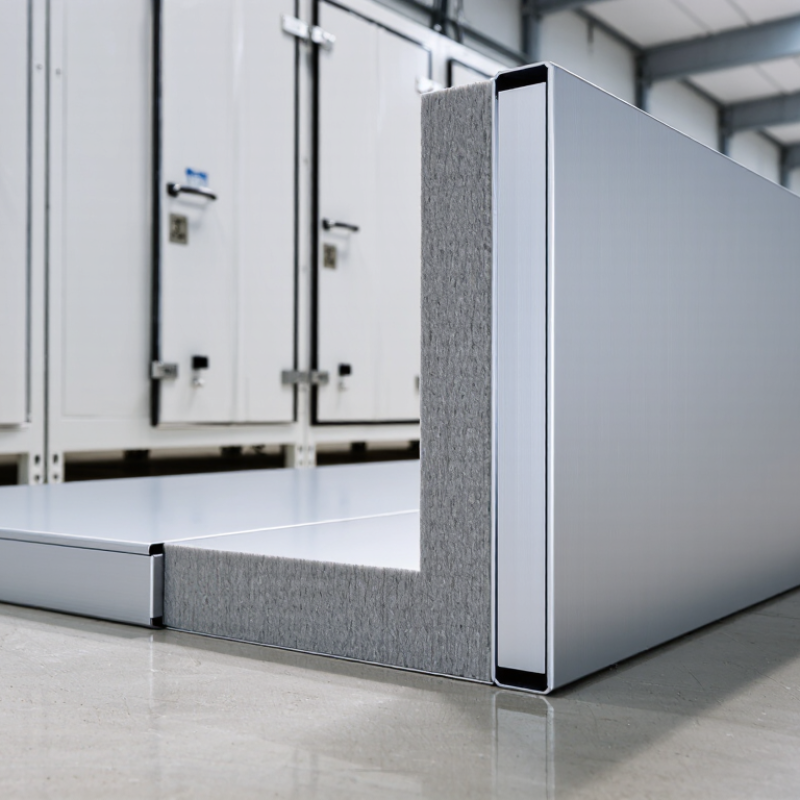
A non-aging foam sandwich panel is an insulated building panel designed to retain its thermal and structural performance over many years. It normally contains a rigid foam core between protective metal or composite facings. The core reduces heat transfer, while the facings resist impact, moisture, and everyday wear.
The phrase “non-aging” needs careful interpretation. No foam remains unchanged forever. Heat, ultraviolet exposure, water, chemicals, and poor installation can reduce performance. In practical site inspections, panels with sealed edges and correctly joined seams usually maintain their shape better. Small gaps can create cold bridges. That matters.
Reliable panels should have documented density, thermal conductivity, fire behavior, water absorption, and dimensional stability data. Independent laboratory testing adds confidence for international buyers. Ask how the core performs after accelerated aging, not only when it is new. Check the facing thickness, joint design, and permissible temperature range. These details often matter more than a polished product photograph.
For cold storage, workshops, clean areas, and modular buildings, the suitable panel depends on climate and use. A low-temperature facility needs stable insulation and carefully protected joints. A humid coastal project needs strong corrosion resistance. Installation also affects service life. Even a well-made panel may fail when cut edges remain exposed or fasteners are overtightened.
The best choice is not simply the thickest panel. It is the panel with verified materials, consistent manufacturing, and installation guidance that workers can follow. Some specifications remain uncertain until testing matches the real project conditions. That is worth acknowledging.
2026 Best Non-Aging Foam Sandwich Panel for Global Buyers?
What Is a Non-Aging Foam Sandwich Panel?
| Evaluation Dimension | Typical Data or Range | What Global Buyers Should Know |
|---|---|---|
| Basic Definition | Insulated composite panel with two facings and a rigid polymer foam core | A foam sandwich panel combines structural or protective facings with a lightweight insulation core. “Non-aging” is a market term rather than a universal technical classification; performance should be verified through test reports and long-term design data. |
| Common Foam Core Types | PIR, PUR, phenolic foam, EPS, and XPS | PIR and PUR are widely used for building insulation. Phenolic foam can provide low thermal conductivity, while EPS and XPS have different moisture, fire, and mechanical-performance profiles. The suitable core depends on the application and local code. |
| Typical Core Density | Approximately 30–45 kg/m³ for many building panels | Density varies by foam chemistry, panel design, and required strength. Higher density may improve compressive or handling performance, but it can also increase weight and cost. |
| Typical Panel Thickness | Approximately 30–250 mm | Common thicknesses include 50, 75, 100, 120, and 150 mm. The correct thickness depends on climate zone, target U-value, indoor temperature, thermal bridges, and building energy requirements. |
| Thermal Conductivity | Approximately 0.020–0.040 W/(m·K), depending on core type and test condition | Lower thermal conductivity generally means better insulation at the same thickness. Buyers should compare declared or design values at the same reference temperature and use the applicable regional calculation method. |
| Thermal Resistance | Approx. 2.5–7.5 m²·K/W for 50–150 mm of core, before thermal bridges | Thermal resistance is approximately thickness divided by thermal conductivity. Actual whole-panel performance is affected by joints, fasteners, facings, edge details, and installation quality. |
| “Non-Aging” Performance | Should be demonstrated by long-term thermal-resistance or accelerated-aging data | Foam properties can change over time because of gas diffusion, temperature, moisture, installation conditions, and joint performance. Request aged design values rather than relying only on the initial laboratory value. |
| Water Absorption | Varies substantially by foam type, density, facing, and test method | Closed-cell foams generally resist liquid-water uptake better than open-cell materials, but panel edges, cut-outs, joints, and damaged facings can allow moisture entry. Check the exact standard and test result. |
| Fire Performance | Depends on core chemistry, facings, thickness, joints, and assembly design | Fire classification is not determined by the foam core alone. Ask for the complete panel assembly classification under the destination market’s required standard, including reaction-to-fire and, where relevant, fire-resistance testing. |
| Typical Facing Materials | Pre-painted steel, aluminum, stainless steel, or glass-fiber-reinforced facing | Metal facings provide protection, stiffness, and surface finish. Select coating type and thickness according to corrosion exposure, humidity, UV exposure, cleaning chemicals, and service temperature. |
| Common Facing Thickness | Approximately 0.30–1.00 mm for many metal-faced panels | Thicker facings may improve impact resistance, screw retention, appearance, and handling durability. The required value depends on span, support spacing, wind load, and project specifications. |
| Mechanical Strength | Varies by core density, facing thickness, panel profile, and span | Do not compare compressive strength alone. Review bending, shear, point-load, deflection, pull-out, and connection performance for the complete panel system and intended support spacing. |
| Typical Applications | Cold rooms, food-processing areas, warehouses, logistics buildings, roofs, walls, and modular structures | Applications differ in hygiene, temperature, vapor-control, fire, impact, and corrosion requirements. A panel suitable for a dry warehouse may not be suitable for a freezer room or a corrosive industrial environment. |
| Operating Temperature | Product-specific; often approximately −40°C to +80°C for selected systems | The allowable range depends on the foam, facings, adhesives, joints, and exposure duration. For refrigeration or high-temperature service, request documented limits for continuous and intermittent use. |
| Dimensional Stability | Must be verified under the intended temperature and humidity conditions | Long-term dimensional changes may result from thermal cycling, moisture, manufacturing tolerances, or incompatible installation details. Review flatness, joint movement, and temperature-cycle test data when stability is critical. |
| Joint and Vapor Control | Cam-lock, tongue-and-groove, overlap, or sealed joint systems | Panel-core performance can be undermined by poorly sealed joints or penetrations. Confirm gasket, sealant, vapor-barrier, fastener, and flashing details for the project’s humidity and temperature conditions. |
| Environmental Considerations | Assess blowing agents, recycled content, service life, and end-of-life options | Ask for environmental product information, refrigerant or blowing-agent data, and applicable life-cycle documentation. Environmental performance cannot be judged solely from the panel’s thickness or insulation value. |
| Quality-Control Documents | Test reports, technical datasheet, batch records, dimensional inspection, and coating certificates | For international purchasing, request documents covering thermal conductivity, density, dimensions, fire behavior, water absorption, mechanical properties, coating, tolerances, and production-batch traceability. |
| Relevant Standards | Examples include ISO, EN, ASTM, and local building-code methods | The correct standard depends on the destination country and application. Confirm whether the project requires EN 14509, ASTM-based testing, ISO methods, or another locally adopted specification before placing an order. |
| Selection Priority for 2026 Buyers | Verified aged performance + complete-system fire data | The strongest selection should balance aged thermal performance, fire classification, moisture control, structural capacity, corrosion resistance, installation details, documentation, and total delivered cost—not only the lowest purchase price. |
Buyer note: Values shown are general industry ranges for preliminary comparison. Final selection should use project-specific calculations, the manufacturer’s declared design values, and the regulations applicable in the destination market.